Buying Your First Homestead Pig: 15 Questions to Ask Before Paying a Deposit

Buying your first pig is exciting. It is also surprisingly easy to make an expensive mistake.
A photograph of a cute piglet tells you very little about the animal you will be feeding, fencing, and caring for two years from now. A small piglet can become a large hog. A friendly pig can become difficult to manage. And a pig advertised as a particular breed may turn out to have ancestry the seller never disclosed.
At Smoky Mountain Acres, we have experienced that last problem firsthand. After three purchases through Facebook pig groups in which the animals were represented as unregistered Kunekunes, we learned that we needed to ask much more detailed questions before buying.
This guide is not intended to discourage anyone from purchasing mixed-breed pigs. Crosses can be excellent animals for the right purpose. The goal is to help buyers understand what they are purchasing and avoid surprises involving size, behavior, health, or breed ancestry.
Here are the 15 questions we believe every first-time homestead pig buyer should ask before paying a deposit.
1. What Breed Is This Pig, and How Do You Know?
Start with the simplest question, but do not accept a vague answer.
A seller may describe a pig as Kunekune, Idaho Pasture Pig, Juliana, Pot-Bellied Pig, or another breed. Ask whether that description is based on registration paperwork, documented parentage, or simply what someone told the seller.
There is a major difference between:
- A registered Kunekune with documented ancestry
- An unregistered Kunekune from known parents
- A Kunekune cross with known parentage
- A pig believed to have Kunekune ancestry
- A pig that merely looks like a Kunekune
Those descriptions represent different levels of certainty.
If the seller does not know the ancestry, that is acceptable as long as the pig is represented honestly. "Unknown Kunekune-type cross" is more useful information than an unsupported claim of purity.
For more detail on identifying common crosses, read our guide to Kunekune pigs and misleading breed listings.
2. Can I See Both Parents?
Photographs of the sire and dam are among the most useful things a buyer can request.
Ask for current photographs of both parents standing naturally from the side, along with clear pictures of their faces, snouts, and overall body structure. If possible, visit the farm and see them in person.
Look beyond color. Compare the parents' leg length, back shape, body depth, head structure, and mature size.
If the seller owns only the sow, ask for information about the boar used for breeding. If the boar is unknown, the seller should disclose that rather than guessing.
A piglet's appearance cannot reliably establish its mature size or exact breed percentages. The parents provide much more useful evidence.
3. How Old and How Large Are the Parents?
A photograph of a "small adult pig" can be misleading if the animal is actually only eight months old.
Ask for the parents' ages and approximate weights. If the seller knows their height or has older offspring from previous litters, that information can also help.
A two-year-old animal gives you a more useful reference than a six-month-old that has not finished growing.
Be cautious of promises such as "it will stay under 100 pounds" unless the seller has reliable evidence from mature animals in the same breeding line. Diet, genetics, sex, and age all affect body size, and no responsible seller can guarantee an exact adult weight for a young pig.
4. Is the Pig Registered, Registerable, or Unregistered?
These are separate questions.
A registered pig has documentation through a breed registry. A registerable pig may meet the requirements for registration but has not yet completed the process. An unregistered pig has no registration papers.
Ask which registry is involved, whether both parents are registered, and whether the piglet will receive its own registration documentation.
For Kunekunes, DNA parentage testing is used to verify descent from known parents. It is not a general breed-percentage test that can identify the exact ancestry of an unknown mixed pig.
If registration matters to your breeding plans, verify the requirements directly with the relevant registry before purchasing.
5. What Is the Pig's Exact Birth Date?
Do not rely only on "about six weeks old" or "around three months."
Ask for the actual birth date, or the closest documented estimate if the seller does not know it.
Age affects weaning, nutrition, transportation, health planning, and how you interpret the animal's size. A piglet that is unusually small for its claimed age may simply be younger than advertised, but it could also have experienced poor nutrition or other problems.
Knowing the birth date also helps you plan the transition into your own feeding and management system.
6. Is the Pig Fully Weaned and Eating Independently?
A piglet should not be sold merely because it has started nibbling solid food.
Ask when it was weaned, what it is currently eating, and whether it is drinking water independently. Request information about its feeding routine and how it has handled separation from the sow.
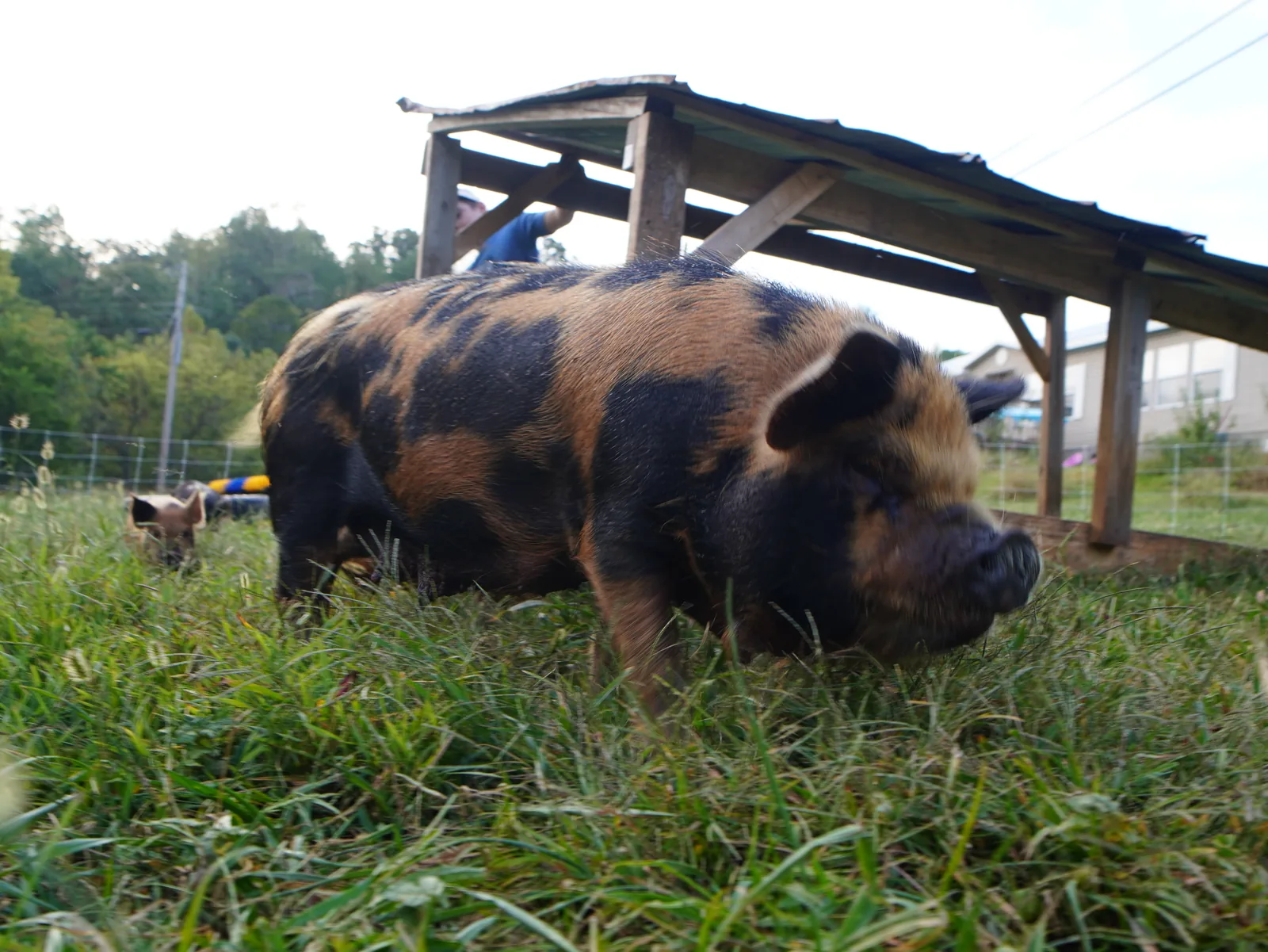
Weaning age varies with management systems, but piglets should be healthy, eating an appropriate diet, and ready for the transition before leaving the breeder.
For a first-time buyer, an established, independently eating piglet is generally easier to manage than one that still requires significant weaning support.
7. What Has the Pig Been Eating?
Ask for the exact feed, approximate daily amount, and whether the pig has access to pasture or supplemental forage.
This question tells you more than the name of the feed. It helps you understand the animal's current condition and what it will cost to maintain.
A pig raised on unrestricted high-calorie feed may look very different from a pig managed on a balanced ration with pasture access. A pig that has been underfed may appear smaller than its genetics would otherwise suggest.
Do not assume that a grazing breed can survive on grass alone. Growing pigs, pregnant or nursing sows, and animals on poor-quality pasture may require substantial supplemental nutrition.
Request enough information to transition feed gradually rather than making an abrupt change immediately after transport.
8. How Does This Pig Behave Around People?
Temperament is especially important for a family homestead.
Ask how the pig responds to ordinary handling, feeding, being moved, and having people enter its enclosure. If possible, observe the animal before purchasing.
A calm pig should be curious or reasonably comfortable around familiar people. A pig that is temporarily nervous around strangers is not necessarily a problem, but persistent aggression, extreme fear, or difficult handling deserves attention.
Do not judge temperament solely by breed. Kunekunes are known for calm dispositions, but other breeds and crosses can also be friendly. Individual genetics, socialization, and management all matter.
Also remember that a friendly pig is still livestock. Even a small pig can bite or injure someone, and adult boars and protective sows require appropriate handling precautions.
9. How Much Does the Pig Root, and How Is It Managed on Pasture?
If your goal is pasture-based homesteading, this is one of the most important questions.
Ask whether the pig has actually lived on pasture, what type of forage it eats, and how much rooting the seller observes. Request photographs of the paddocks after the pigs have occupied them.
Kunekunes and Idaho Pasture Pigs are often selected for grazing ability, but no breed is guaranteed to leave pasture untouched. Rooting behavior is influenced by genetics, soil, forage availability, stocking density, nutrition, and management.
A pig that grazes well may still root under certain conditions.
The useful question is not whether the seller calls it a "pasture pig." It is whether the animal has demonstrated the behavior you want under conditions similar to your own farm.
10. What Fencing Has the Pig Been Trained to Respect?
Never assume a pig will automatically respect your fence.
Ask whether the animal has been raised behind electric netting, electric wire, woven wire, panels, or another fencing system. Find out whether it has experience with electric fencing and how it responds when moved to a new enclosure.
Pigs are intelligent and can learn fencing boundaries, but training and proper installation matter. A pig accustomed to a secure panel pen may need a carefully managed introduction to electric fencing.
Before bringing pigs home, have a secure enclosure prepared. Do not make the animal's first day on your property an experiment in whether your fence works.
11. What Health Care Has the Pig Received?
Request a clear history of veterinary care, vaccinations, parasite management, injuries, and any known illnesses.
Ask whether the pig has ever had respiratory problems, diarrhea, lameness, skin issues, or difficulty gaining weight. If medications have been administered, request the dates, product names, and any applicable withdrawal information for animals intended for food production.
Health protocols vary by region, farm, and intended use, so there is no single vaccination or deworming schedule that applies to every pig.
For interstate purchases, verify the current animal-health and transport requirements with the appropriate state authorities or your veterinarian before moving the animal.
A reputable seller should be willing to discuss health history openly, including problems that have occurred.
12. Is the Pig Intact, Castrated, or Spayed?
This question has major implications for management.
For males, ask whether the pig is an intact boar or a castrated barrow. If castrated, ask when the procedure was performed and whether there were complications.
For females, ask whether they are intact or spayed. Most female farm pigs are sold intact, but the distinction should still be clear.
If you do not intend to breed pigs, plan accordingly. Intact males and females can reproduce earlier than many inexperienced owners expect, and accidental breeding can create serious problems.
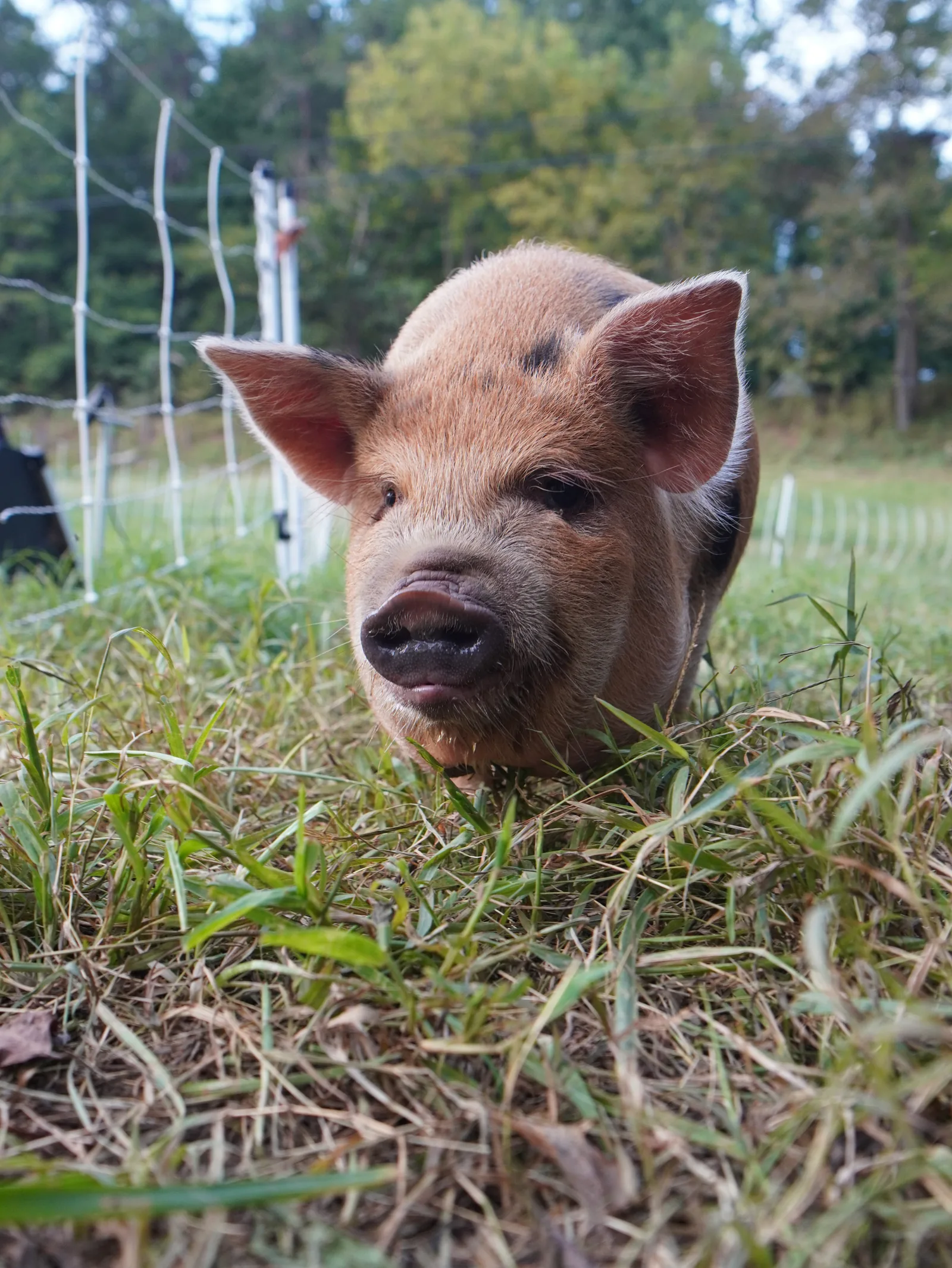
Do not assume that two young piglets can safely remain together indefinitely simply because they are still small.
13. Has the Pig Been Exposed to Other Pigs, and How Does It Behave in a Group?
Pigs are social animals, but introductions can involve fighting and competition.
Ask whether the pig has lived with littermates, adult pigs, or other livestock. Find out whether it has shown unusual aggression around feed or during introductions.
If you already own pigs, plan a gradual introduction with appropriate fencing and space. New animals should also be managed according to a veterinarian-informed biosecurity plan before joining an established herd.
A pig that is friendly toward people may still be dominant or aggressive toward other pigs. Those are different aspects of behavior.
14. What Happens If the Pig Is Not as Described?
Discuss the terms before paying.
Ask whether the deposit is refundable, whether there is a written sales agreement, and what the seller will do if the pig's sex, registration status, or other material information turns out to be incorrect.
Get important representations in writing, including:
- Breed or disclosed cross
- Birth date
- Sex
- Registration status
- Known health history
- Purchase price and deposit
- Pickup or delivery arrangements
- Any agreed return or refund terms
A written agreement does not eliminate every dispute, but it makes expectations much clearer.
Keep copies of the listing, messages, payment records, and any paperwork supplied with the animal.
15. Why Are You Selling This Pig, and What Are Your Breeding Goals?
This question often reveals more than a breed label.
Ask the breeder what traits they are selecting for and why they chose the sire and dam. Are they breeding for pasture performance, pork production, temperament, conformation, show quality, or companion animals?
A thoughtful breeder should be able to explain the purpose of the pairing, even if the animals are unregistered or mixed-breed.
For example, a deliberate Kunekune x Idaho Pasture Pig cross may be intended to produce a faster-growing pasture pork animal. A breeder maintaining a Kunekune herd may instead prioritize breed type, temperament, and documented ancestry.
Neither goal is inherently wrong. The important thing is that the buyer understands which goal the breeder is pursuing.
A Quick Comparison: What Matters Most for Your Homestead?
| Your priority | What to investigate |
|---|---|
| Small family companion | Mature size, temperament, handling history, and fencing |
| Pasture-based pork | Grazing ability, growth rate, body structure, and feed requirements |
| Breeding Kunekunes | Documented ancestry, registration eligibility, and breed conformation |
| Minimal pasture damage | Proven grazing behavior, stocking density, and management history |
| Fast meat production | Growth genetics, feed efficiency, mature size, and processing goals |
| Family farm tours | Calm temperament, predictable handling, health, and visitor-safe management |
No single breed is perfect for every purpose. A pig that is excellent for producing pork may be too large for someone seeking a small companion animal. A smaller, slower-growing pig may be ideal for one homestead and inefficient for another.
Choose the animal that fits your actual goals, not just the breed name in the advertisement.
Red Flags We Take Seriously
A seller does not need to have a professional website or expensive registration paperwork to be trustworthy. Many excellent breeders are small farmers.
However, several warning signs should make you investigate further:
- The seller refuses to show either parent.
- The pig's age changes between conversations.
- The seller guarantees an unrealistically small adult size.
- A mixed-breed pig is advertised as purebred without evidence.
- The seller claims DNA testing can prove exact breed percentages without explaining the test.
- The piglet is not fully weaned but is being pushed for immediate pickup.
- The seller cannot explain what the animal eats.
- Health problems are dismissed without clear information.
- The seller pressures you to send a deposit before answering basic questions.
- Important details in the listing do not match the sales agreement.
One red flag does not automatically prove dishonesty. Several together are a reason to reconsider the purchase.
Our Approach at Smoky Mountain Acres
We raise unregistered Kunekunes and may occasionally have Kunekune crosses available. We believe buyers should be told what we know about an animal's ancestry and what remains uncertain.
If a pig is a known cross, it should be identified as a cross. If parentage is documented, that information should be shared. If ancestry is uncertain, we would rather disclose the uncertainty than make a claim we cannot support.
Our own experiences purchasing pigs have made us more careful about the questions we ask and the information we provide to others.
A mixed pig can be an excellent addition to a homestead. The problem is not the mix. The problem is paying for one animal and receiving something substantially different from what was represented.
Before You Bring Your Pig Home
Once you have chosen the right animal, prepare the farm before pickup. Have secure fencing, appropriate shelter, clean water, suitable feed, and a plan for introducing the pig to any existing livestock.
Arrange veterinary guidance for health, biosecurity, and any required transport documentation. Make sure you understand the animal's current feeding routine and have a safe method for loading and unloading it.
Most importantly, remember that purchasing the pig is only the beginning. The real commitment is the daily care that follows.
If you are considering Kunekunes or Kunekune crosses, our Kunekune breed identification guide explains the differences between common breeds and why appearance alone cannot establish ancestry.
You can also learn more about our animals on the Our Animals page or contact Smoky Mountain Acres with questions about our current livestock.
Smoky Mountain Acres is a small family farmstead in Cosby, Tennessee. This article shares our experiences and general husbandry information. Veterinary, transport, and livestock regulations should be verified with qualified local professionals and the relevant authorities.