
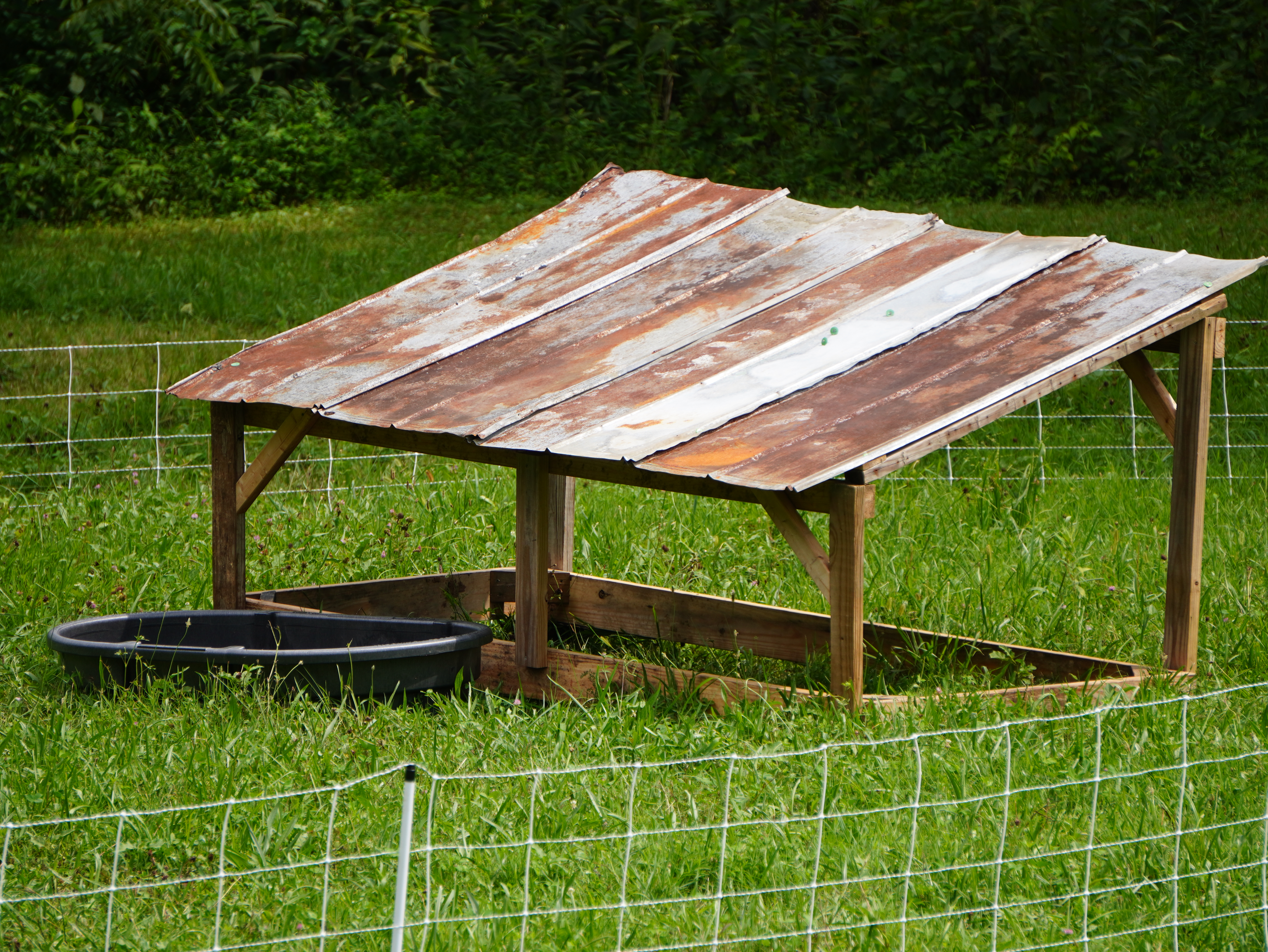
How to Build an Affordable Pig Shed
Pigs do not necessarily need an expensive barn.
For a small homestead, a simple shelter can provide protection from rain, wind, sun, and cold weather while keeping construction costs manageable.
What a Pig Shelter Needs
A basic pig shelter should provide:
- A dry place to sleep
- Protection from rain
- Shade during hot weather
- Protection from strong wind
- Good ventilation
- Enough space for all pigs to lie down comfortably
The design does not need to be complicated.
Start With a Simple Frame
Pressure-treated lumber is commonly used for parts of the structure that contact the ground.
A simple shed can be framed using posts and standard dimensional lumber.
The exact dimensions depend on the number and size of pigs.
A small group of pigs may only need a modest shelter, while larger animals require more floor space.
Use a Sloped Roof
A single-slope roof is one of the simplest options.
One wall is built slightly taller than the opposite wall, allowing rainwater to run off.
Metal roofing is especially practical for farm shelters because it is durable and relatively easy to install.
Used roofing panels can sometimes reduce the cost further if they are still in good condition.
Leave the Front Open
In many climates, a three-sided shelter works well.
The back and sides block wind and rain while the open front provides ventilation and easy access.
The opening should usually face away from prevailing winter winds.
Keep the Floor Dry
Drainage is one of the most important parts of the shelter.
Build the shed on slightly elevated ground when possible.
A wet sleeping area can quickly become muddy and unsanitary.
Straw or other appropriate bedding can provide additional insulation and help keep pigs comfortable.
Protect Exposed Wood
Pigs are strong and curious animals.
They may rub against walls, chew exposed materials, and push on weak framing.
Fasteners should be secure, sharp edges should be covered, and the structure should be sturdy enough to withstand regular contact from the animals.
Reuse Materials Carefully
Farm shelters are a good place to use reclaimed materials.
Useful materials may include:
- Used metal roofing
- Reclaimed lumber
- Pallets in appropriate applications
- Leftover construction lumber
- Salvaged hardware
Avoid materials containing exposed nails, screws, sharp metal, toxic coatings, or heavily deteriorated wood.
Simple Is Often Better
A pig shelter does not need to look like a finished building.
The main objective is to keep the animals dry, shaded, protected from weather, and comfortable.
A simple, durable structure can accomplish that without the expense of constructing a full barn.