Pasture-Raised vs. Free-Range vs. Cage-Free Eggs: What's the Difference?
- Smoky Mountain Acres
 Smoky Mountain Acres

Walk down the egg aisle at almost any grocery store and you'll find cartons labeled cage-free, free-range, pasture-raised, organic, and sometimes several of those terms at once.
They may sound similar, but they don't all mean the same thing.
The simplest difference is this: cage-free hens can move around inside a building, free-range hens have access to the outdoors, and pasture-raised hens generally spend substantially more time outdoors on pasture. The exact conditions, however, can vary considerably from one farm to another.
For families trying to understand where their food comes from, the label on the carton is only the beginning. How the chickens actually live, what they eat, how much outdoor space they have, and how the farm manages its flock can tell you much more.
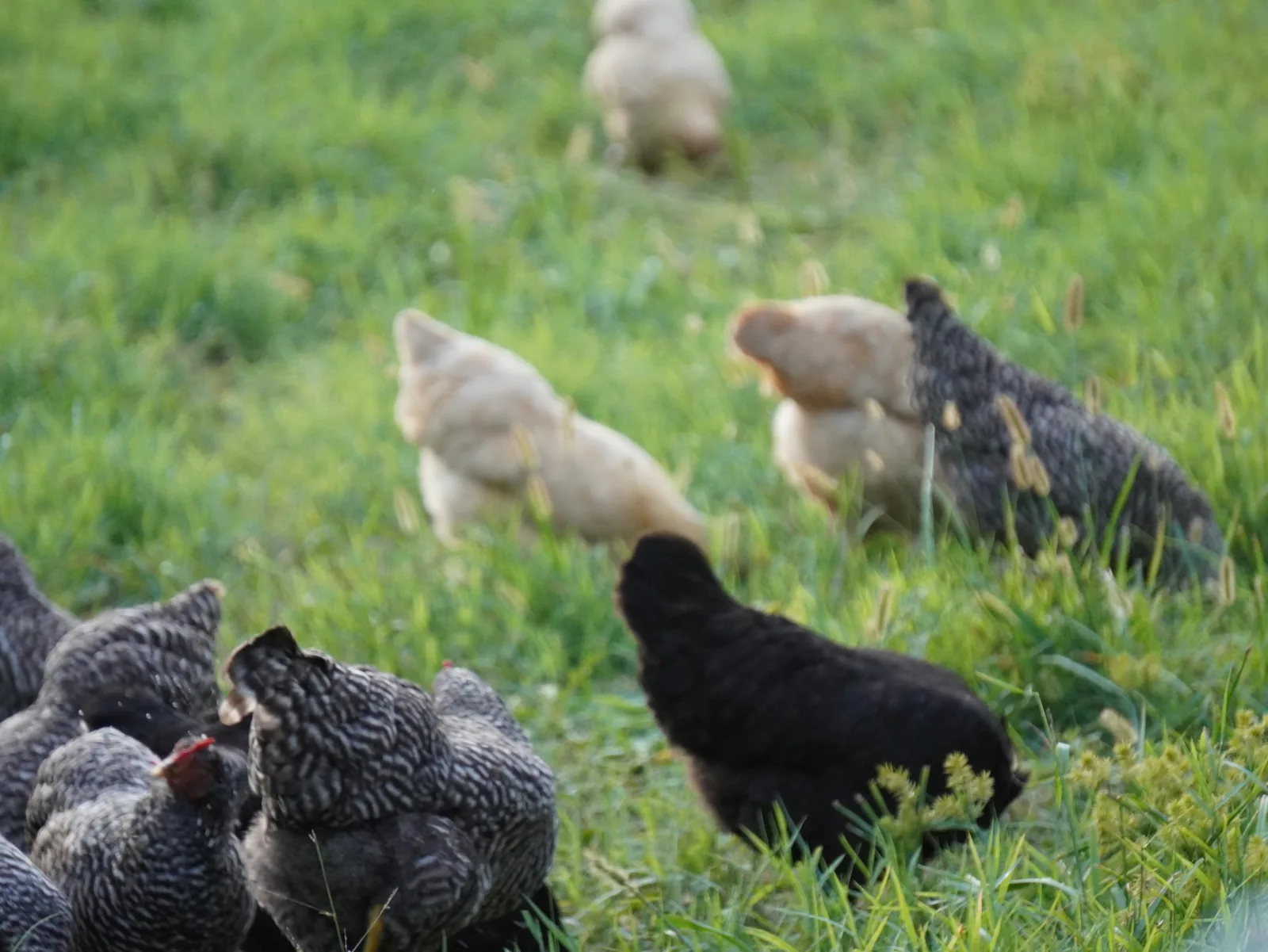
Here in the foothills of East Tennessee, that distinction feels especially important. Chickens are naturally busy little creatures. Give them room and they'll scratch through leaves, hunt bugs, dust-bathe in dry dirt, investigate anything new, and somehow manage to be exactly where you're trying to walk.
Let's break down what the common egg labels really mean.
What Are Cage-Free Eggs?
Cage-free eggs come from hens that are not kept in individual or battery cages, but that does not necessarily mean the chickens go outdoors.
Under USDA standards for eggs carrying USDA grading and cage-free claims, cage-free hens must be able to move vertically and horizontally within their indoor housing. Their environment must also provide things such as litter, nesting areas, perches, scratching areas, food, and water.
That is a meaningful difference from traditional battery-cage systems.
But the important word is indoor.
A cage-free chicken may spend her entire life inside a large barn with thousands of other birds.
So when you see "cage-free" on a carton, it generally tells you something about what the hen was not kept in. It does not necessarily tell you that she spent her days walking through grass or scratching around outside.
Do cage-free chickens go outside?
Not necessarily.
Cage-free primarily describes the indoor housing system. Outdoor access is not required simply because eggs are labeled cage-free.
That distinction is one of the most common sources of confusion when buying eggs.
What Are Free-Range Eggs?
Free-range eggs come from hens that have access to the outdoors in addition to being able to move around inside their housing.
For USDA-grademarked eggs labeled free-range, hens must have continuous access to an outdoor area during their laying cycle. The outdoor area may be fenced or covered to protect the flock.
That makes free-range a step beyond cage-free when outdoor access matters to you.
But "access to outdoors" doesn't necessarily paint the whole picture.
A free-range farm might have chickens regularly walking through grass and sunshine.
Another operation may technically provide outdoor access while the birds spend much of their time inside.
Weather, predators, flock size, farm design, disease precautions, and the chickens themselves can all affect how much outdoor time the birds actually get.
That is why we think it is worth asking a better question than simply:
"Are these eggs free-range?"
Ask:
"What does free-range look like on this particular farm?"
Those two questions can produce very different answers.
What Are Pasture-Raised Eggs?
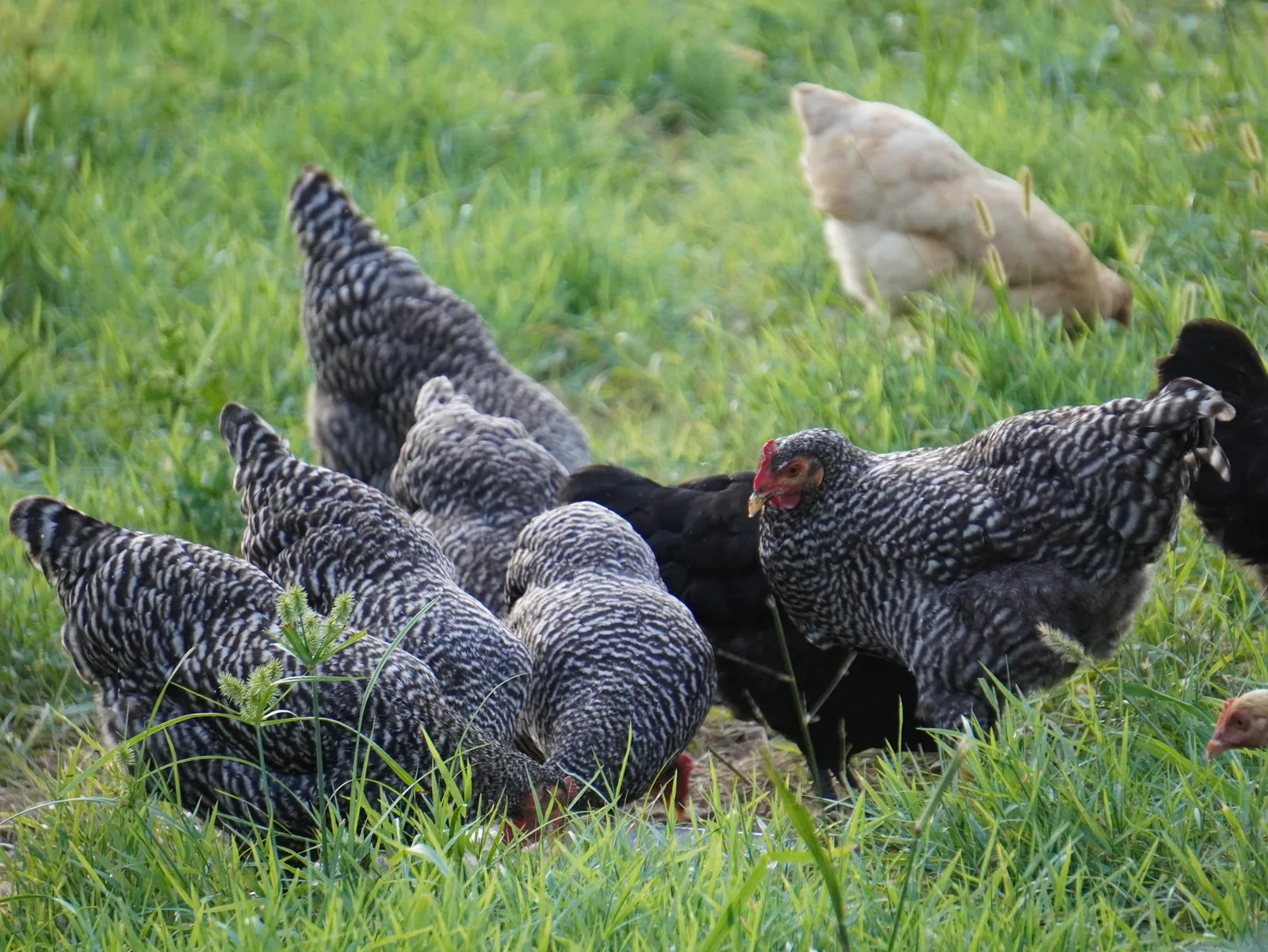
Pasture-raised generally describes eggs from hens that are raised with substantial access to outdoor pasture rather than primarily living inside a barn.
This is probably closest to the picture many people imagine when they hear phrases such as "farm-fresh eggs": chickens outside in the grass, scratching, pecking, foraging, dust-bathing, and returning to shelter or nesting areas as needed.
There is an important wrinkle, though.
Unlike cage-free and free-range, "pasture-raised" does not have one universal federal definition covering every egg carton in every situation. In 2025, USDA updated its requirements for USDA-grademarked eggs so that eggs carrying a "pastured" or "pasture raised" claim must be certified by a nationally recognized third-party certification organization.
Different certification programs can therefore have specific requirements concerning outdoor space, housing, pasture access, and flock management.
This is another reason to look beyond the words on the carton.
When buying eggs directly from a small farm, you can simply ask the farmer how the chickens are raised.
That is one of the nice things about buying food locally: sometimes the person handing you the eggs is also the person who gathered them.
Cage-Free vs. Free-Range vs. Pasture-Raised Eggs
Here is the basic comparison:
| Type of egg | Hens kept out of cages? | Outdoor access? | Pasture expected? |
|---|---|---|---|
| Cage-free | Yes | Not required | No |
| Free-range | Yes | Yes | Not necessarily |
| Pasture-raised | Yes | Yes | Generally yes |
The biggest difference is not really the egg itself.
It is how the chicken lives.
Cage-free
Think:
"The chicken can move around indoors."
Free-range
Think:
"The chicken can go outdoors."
Pasture-raised
Think:
"Outdoor pasture is an important part of the chicken's living environment."
Those aren't perfect definitions for every farm or certification program, but they're a useful starting point for understanding the labels.
Are Pasture-Raised Eggs the Same as Organic Eggs?
No.
"Pasture-raised" and "organic" describe different things.
Pasture-raised primarily concerns how chickens are housed and their access to pasture.
Organic certification involves a broader set of USDA production standards, including requirements concerning feed and flock management.
A chicken can therefore be:
- pasture-raised but not certified organic
- organic and free-range
- both organic and pasture-raised
- cage-free without being organic
The words shouldn't automatically be treated as interchangeable.
This distinction matters especially when feed is important to you.
A hen roaming outdoors may still receive conventional feed unless the farm says otherwise.
Likewise, seeing "organic" on a carton doesn't automatically tell you everything you may want to know about how much time that particular flock spends foraging through pasture.
When buying directly from a farm, ask both questions:
How are your chickens raised?
and
What do you feed them?
Does "Pasture-Raised" Mean Chickens Only Eat Grass and Bugs?
No.
Chickens aren't grazing animals in the same sense as cattle or sheep.
They are omnivores.
Put a chicken outside and you'll quickly discover that she considers an impressive number of things edible.
Chickens naturally scratch and forage for things including:
- grasses and tender plants
- seeds
- insects
- worms
- other small invertebrates
But laying hens generally still receive a nutritionally balanced feed ration as part of their diet.
Good egg production requires adequate protein, energy, calcium, vitamins, and minerals. Pasture can supplement that diet and allows chickens to engage in natural foraging behavior, but simply putting chickens on grass doesn't mean they can live entirely from whatever they find there.
So another useful question for a local farmer is:
"What feed do your chickens receive in addition to what they forage?"
Are Pasture-Raised Eggs More Nutritious?
This is where marketing claims can sometimes get ahead of the evidence.
Housing terms alone shouldn't be treated as a guarantee that one egg will always have a particular nutritional profile.
The USDA specifically notes that it does not have definitive scientific data showing a nutritional difference in eggs simply because hens were housed cage-free or free-range rather than in cages.
A hen's diet, breed, age, season, access to forage, and other management factors can influence the egg she produces.
That means "pasture-raised" is best understood first as a farming and animal-management description, rather than a promise about a particular nutrient level.
For many families, that distinction is enough.
They aren't necessarily buying local eggs because they're trying to squeeze an extra percentage point of a nutrient out of breakfast.
They're buying them because they want to understand how the animal lived and how their food was produced.
Are Dark Orange Yolks Proof That Eggs Are Pasture-Raised?
No.
Yolk color is largely influenced by pigments in a hen's diet.
Chickens eating certain plants, insects, or feed ingredients may produce darker orange yolks, but yolk color alone doesn't prove that a chicken was pasture-raised.
Likewise, a lighter yolk doesn't automatically mean anything is wrong with the egg.
This is another place where knowing the farmer tells you more than trying to judge an entire production system from one egg cracked into a skillet.
Are Brown Eggs Healthier Than White Eggs?
No.
Shell color is primarily determined by the breed of chicken.
Some breeds lay white eggs. Others lay brown, cream, blue, green, olive, or tinted eggs.
The USDA notes that brown eggs often cost more to produce because the breeds laying them tend to be larger, but shell color itself is not an indication that one egg is healthier or was raised under better conditions.
On a small farm with several breeds of chickens, opening an egg carton can sometimes look more like opening a box of Easter eggs than something from a grocery store.
We happen to like it that way.
What Does "Farm-Fresh Eggs" Mean?
"Farm-fresh" sounds wonderful, but by itself it doesn't tell you how chickens were raised.
The useful questions are much more specific:
- Do the chickens live outdoors?
- How much outdoor space do they have?
- Are they rotated onto fresh ground?
- What are they fed?
- Are pesticides or herbicides used where they forage?
- Are they locked safely inside at night?
- How large is the flock?
- Can customers see how the animals are raised?
Those answers tell you considerably more than attractive packaging ever could.
Why Do Small Farms Move Chickens Around?
One common practice on smaller farms is moving chickens or their fencing periodically so they have access to fresh ground.
There are several practical reasons for doing this.
Chickens scratch constantly.
They eat plants and bugs, disturb the soil surface, deposit manure, and eventually wear heavily used areas down to bare earth.
Moving a flock can:
- provide fresh vegetation and forage
- spread manure over a larger area
- reduce damage to any one patch of ground
- give chickens new places to explore
- help keep heavily trafficked areas cleaner
It also means chicken pasture doesn't have to look like a perfectly manicured lawn.
Honestly, chickens wouldn't respect a perfectly manicured lawn anyway.
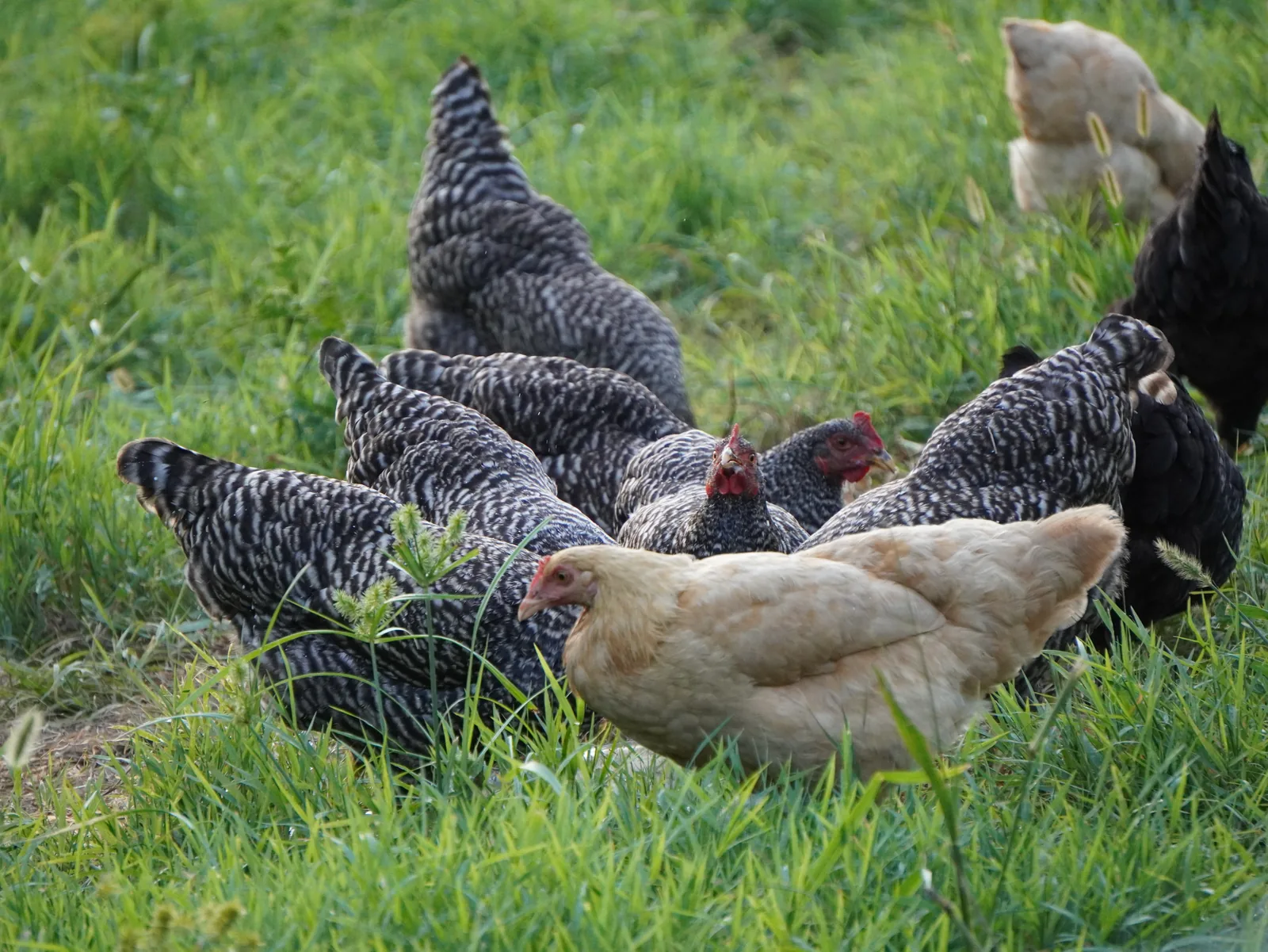
A healthy chicken area may contain grass, weeds, leaves, bare scratching spots, shade, brush, bugs, and all sorts of things that would offend a golf-course groundskeeper.
The chickens are generally pleased with the arrangement.
Why Does Buying Eggs From a Local Farm Make a Difference?
The biggest advantage may simply be transparency.
A grocery-store carton has to summarize an entire farming system with a handful of words.
When you buy eggs directly from a farmer, you can ask questions.
You may be able to see the chickens yourself.
You can find out what they eat.
You can learn whether they actually spend their days outside.
You can ask how the farmer handles pasture, predators, winter weather, and flock health.
That doesn't mean every small farm automatically uses better practices than every large farm.
It means you have the opportunity to know more about the food you're buying.
And we think that's valuable.
What Should You Ask Before Buying Local Eggs?
If you're looking for local eggs in East Tennessee or anywhere else, here are five simple questions worth asking:
1. Are your chickens kept outside?
Find out whether outdoor access is occasional or part of their normal daily life.
2. What do you feed your chickens?
Pasture access and feed quality are separate questions.
3. Do you rotate your chickens onto fresh ground?
Some farms regularly move their flock or portable fencing to manage pasture.
4. Do you use pesticides or herbicides where the chickens forage?
If avoiding those products matters to your family, ask directly rather than assuming.
5. Can I see how the chickens are raised?
A farmer who sells directly to the public can often describe the setup, show photographs, or let visitors see the animals during an appropriate farm visit.
How We Think About Eggs at Smoky Mountain Acres
At Smoky Mountain Acres, we believe knowing where your food comes from should be fairly simple.
Our farmstead sits in the foothills of the Smoky Mountains near Cosby, Tennessee, where our chickens are part of everyday farm life rather than something hidden behind a label.
We want our animals to have the opportunity to behave like animals.
For chickens, that means scratching, pecking, exploring, dust-bathing, finding bugs, and doing all the other peculiar little things chickens spend their days doing.
We also feed our animals organic feed and do not use synthetic fertilizers or pesticides on our farm.
Those choices require more hands-on management, but that's part of why we chose this kind of life in the first place.
We aren't interested in making a carton sound better than the farm behind it.
We'd rather show you the farm behind the carton.
So Which Eggs Should You Buy?
If your primary concern is avoiding traditional cages, cage-free eggs address that concern.
If outdoor access matters to you, look toward free-range eggs.
If you want hens whose lives are substantially centered around outdoor pasture, pasture-raised is generally the term you're looking for, but check the farm or certification behind the claim.
And if you're able to buy directly from a local farmer, ask questions.
Labels are helpful.
Knowing your farmer is better.
Around here, eggs start with chickens scratching through grass, wandering over to see what we're doing, arguing over particularly interesting bugs, and eventually making their way back to a nesting box.
Breakfast just happens to be one of the benefits.
Frequently Asked Questions About Pasture-Raised, Free-Range, and Cage-Free Eggs
What is the difference between cage-free and free-range eggs?
Cage-free hens can move around inside their housing but aren't necessarily given outdoor access. Free-range hens are cage-free and also have access to an outdoor area.
What is the difference between free-range and pasture-raised eggs?
Free-range means chickens have outdoor access. Pasture-raised generally indicates that outdoor pasture plays a much larger role in the hens' living environment. Requirements can vary depending on the certification or production system.
Are pasture-raised eggs organic?
Not necessarily. "Pasture-raised" describes the hens' living environment, while certified organic production has separate USDA requirements, including standards involving feed and management.
Are cage-free chickens outside?
Not necessarily. Cage-free hens may live entirely inside a barn as long as they aren't confined to cages and the applicable housing requirements are met.
Do pasture-raised chickens eat only grass?
No. Chickens are omnivores and forage for plants, seeds, insects, worms, and other food, but laying hens generally also receive a nutritionally balanced feed.
Are brown eggs healthier than white eggs?
No. Eggshell color is primarily determined by the breed of chicken and does not by itself indicate nutritional quality or farming method.
Are orange egg yolks healthier?
A darker yolk often reflects differences in a hen's diet, but yolk color alone does not prove that an egg is pasture-raised or nutritionally superior.
Where can I buy local farm eggs near Gatlinburg, Cosby, or the Smoky Mountains?
Small farms and farmsteads throughout East Tennessee sell eggs directly when their flocks produce a surplus. Smoky Mountain Acres is located in Cosby, Tennessee, near Great Smoky Mountains National Park, and shares information about our animals, farm products, and availability through our website.
- Chickens