What Do Pigs, Chickens, and Sheep Actually Eat on a Small Farm?
- Smoky Mountain Acres
 Smoky Mountain Acres

When people picture farm animals eating, they often imagine something simple: cows eating grass, chickens pecking at corn, and pigs eating just about anything.
The reality is more interesting.
On a pasture-based small farm, pigs, chickens, and sheep can all get a meaningful part of their diet from the land, but each species eats differently and has different nutritional needs. At Smoky Mountain Acres, our animals are raised on pasture and supplemented with organic feed appropriate for their species. We do not rely on conventional livestock feed as the foundation of our feeding program.
Our goal is straightforward: give our animals access to fresh pasture, allow them to forage naturally, and use organic feed when supplementation is needed.
Here is what that actually looks like.
What Do Pigs Eat on Pasture?
Pigs are omnivores and natural foragers.
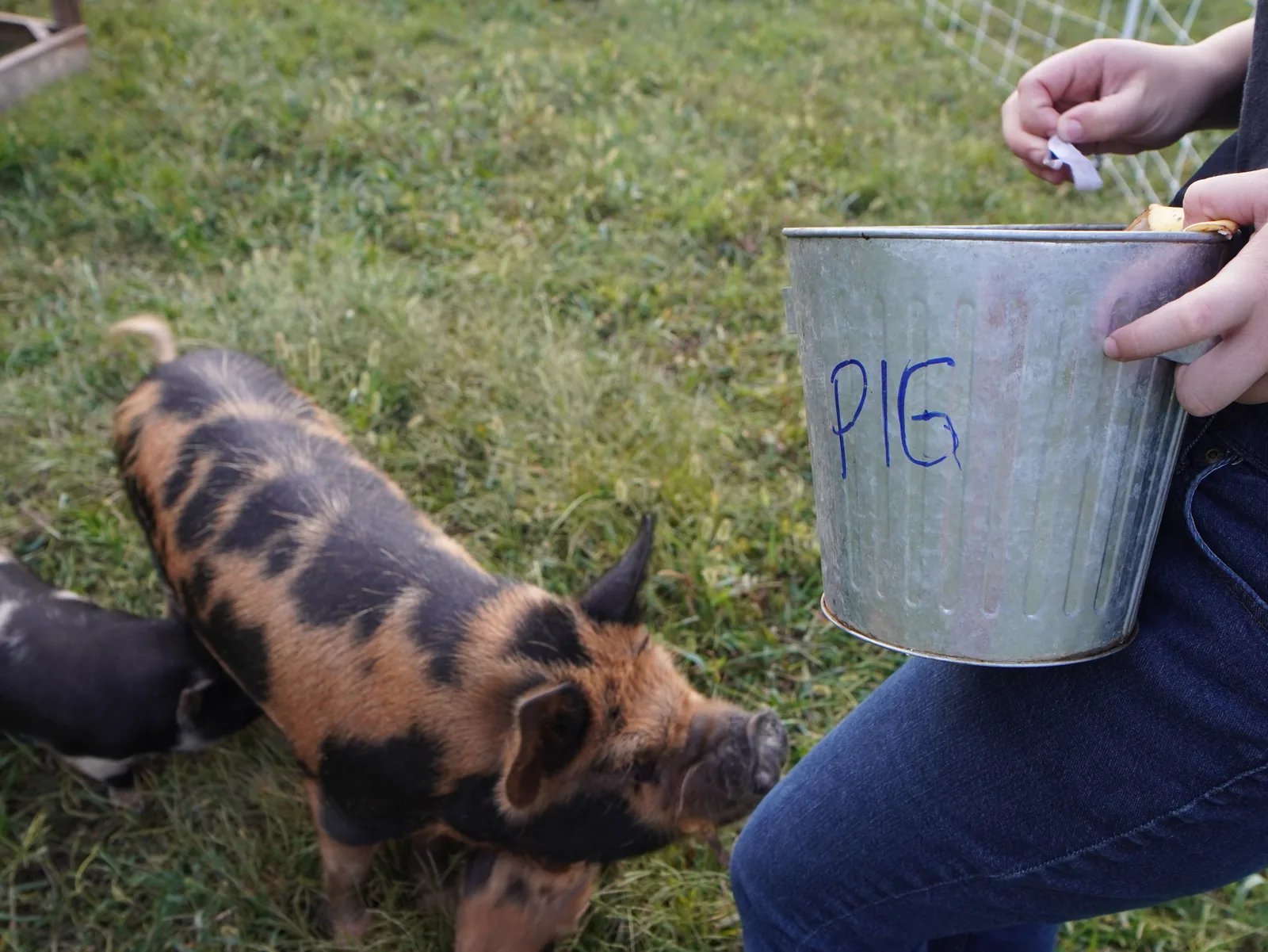
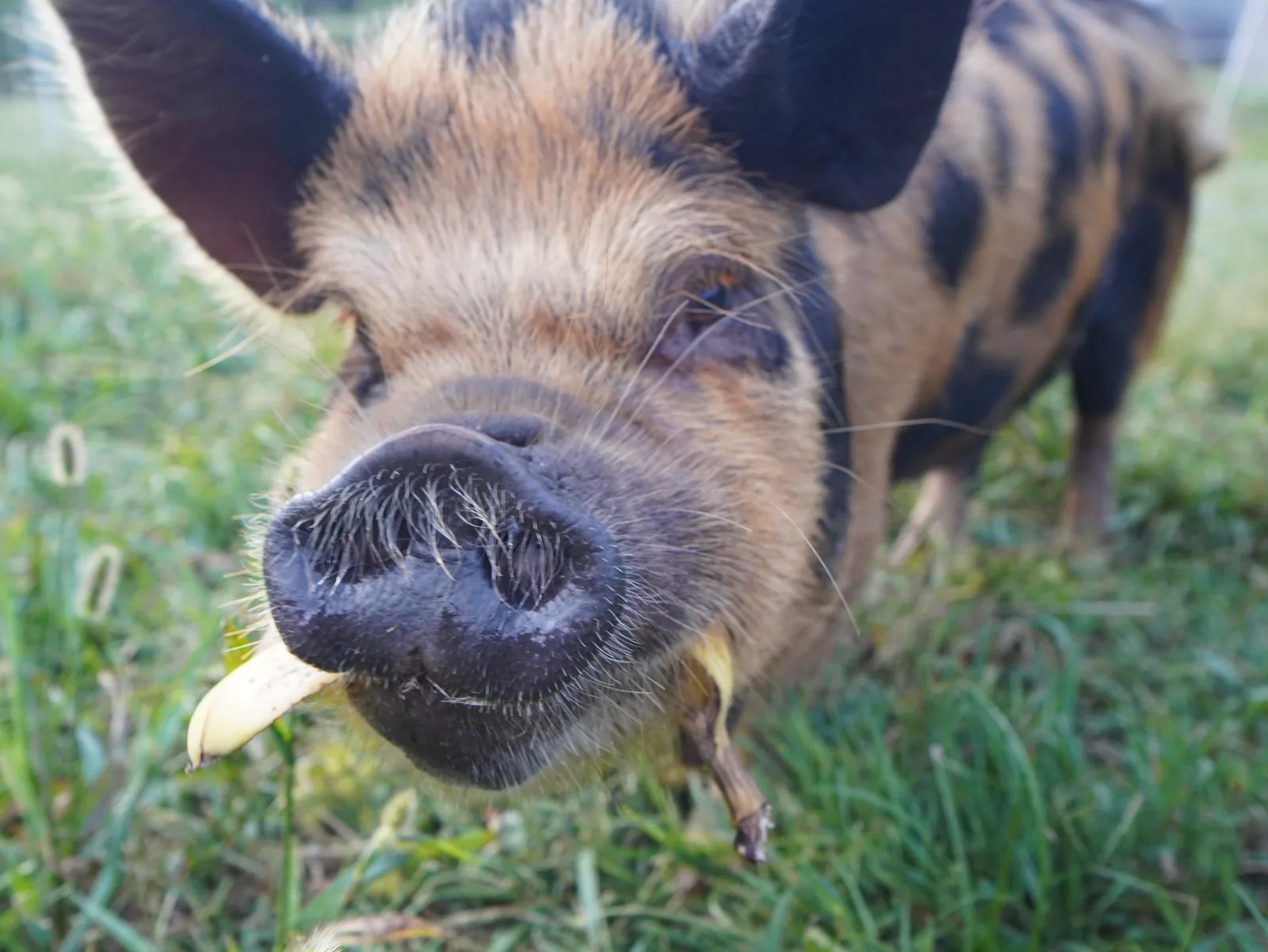
Turn a pig loose on healthy pasture and it will spend much of the day investigating the ground with its nose.
Pasture-raised pigs may eat:
- grasses
- clover
- broadleaf plants
- roots
- seeds
- fallen fruit
- acorns and nuts
- insects
- worms
- grubs
- other small organisms they uncover while rooting
Pigs do not graze exactly like sheep or cattle. They forage with their noses, dig into the soil, turn over sod, and search for whatever looks edible.
That natural behavior is one reason pasture is so valuable for pigs.
It gives them food, but it also gives them something to do.
A pig in a healthy pasture environment can spend hours walking, rooting, grazing, exploring, and interacting with the rest of the herd.
Can Pigs Live Entirely on Pasture?
Usually not.
Pasture can contribute significantly to a pig's diet, but growing pigs still need enough protein, energy, minerals, and other nutrients to develop properly.
That is why our pigs also receive organic feed.
We see pasture and feed as complementary rather than competing ideas.
The pasture lets pigs forage naturally.
The organic feed helps ensure that their nutritional requirements are being met.
We are not trying to force pigs into an artificial "grass only" diet simply because it sounds appealing on a label.
We want them eating the way pigs are naturally inclined to eat while still providing responsible nutrition.
Why Organic Pig Feed?
Not all livestock feed is produced the same way.
When we supplement our pasture-raised pigs, we choose organic feed rather than conventional feed.
That matters to us because the feed an animal consumes is part of the food-production system.
If our goal is to raise animals in a way that is as natural and straightforward as practical, it would make little sense to carefully manage pasture and then ignore what goes into their feed trough.
For us, organic feed and pasture belong together.
What Do Chickens Eat on Pasture?
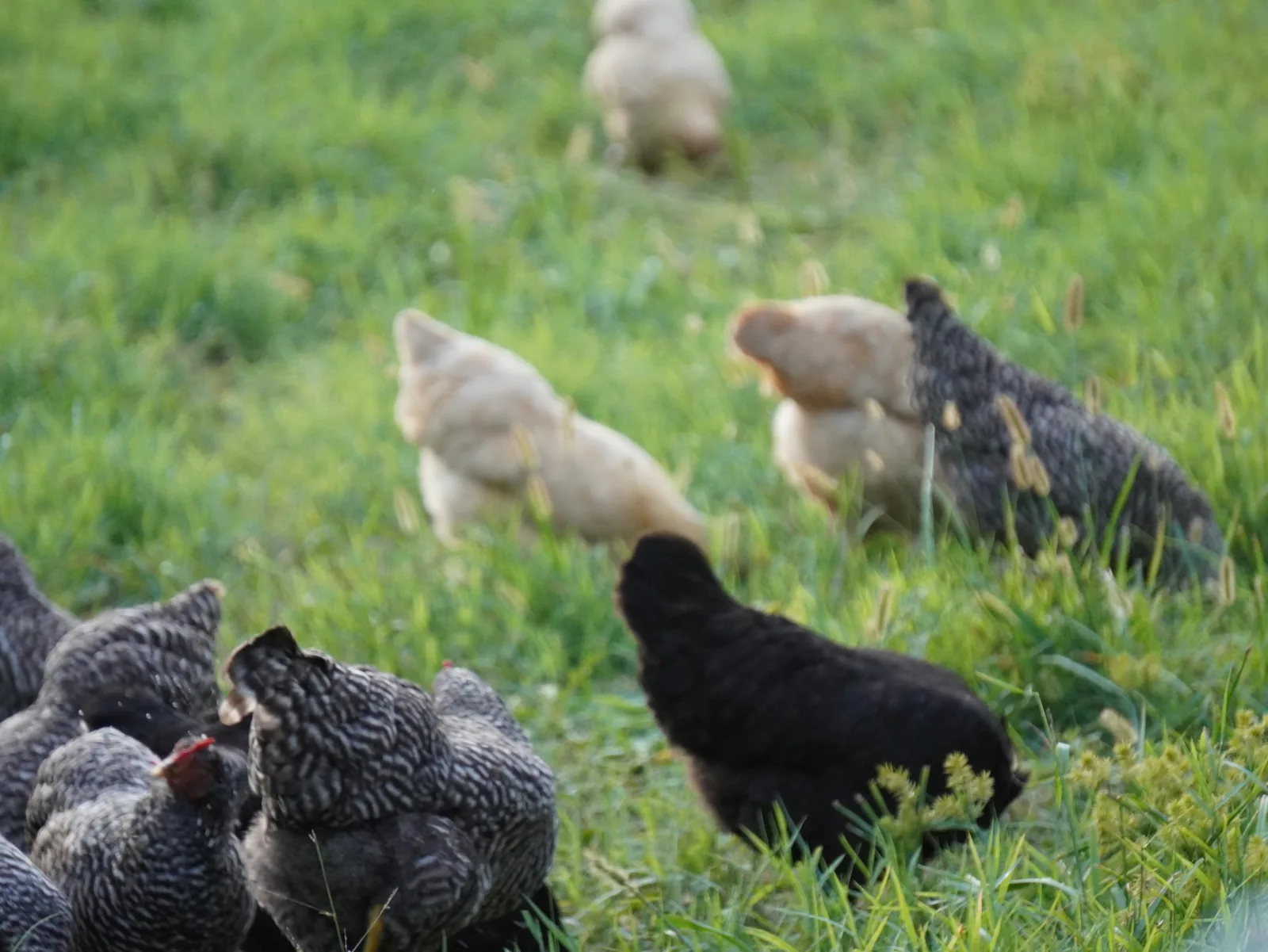
Chickens might be the most enthusiastic foragers on the farm.
They scratch constantly.
One chicken scratches backward through leaves or grass while another waits nearby to steal whatever gets uncovered.
Pastured chickens may eat:
- grass
- tender plants
- seeds
- insects
- beetles
- grasshoppers
- worms
- larvae
- spiders
- small bits of vegetation
- whatever else they discover while scratching
Chickens are omnivores, not vegetarians.
Bugs are very much on the menu.
Watching chickens forage makes this obvious very quickly. If one bird finds something especially interesting, the entire flock may suddenly decide that particular bug is the most important resource on the farm.
Do Pasture-Raised Chickens Still Need Feed?
Yes.
Pasture is valuable, but laying hens require a nutritionally balanced diet to maintain their health and produce eggs consistently.
Egg production requires significant nutrition, particularly adequate protein, minerals, vitamins, energy, and calcium.
Our chickens therefore forage on pasture while also receiving organic poultry feed.
That gives them the opportunity to eat plants and insects naturally while still having access to feed designed around the nutritional requirements of laying hens.
We do not view pasture as a marketing term.
It is simply where chickens make the most sense to us.
They get to scratch.
They get to hunt insects.
They get sunlight.
They get fresh ground.
And they get to behave like chickens.
What Do Sheep Eat?
Sheep are different from both pigs and chickens.
They are grazing animals.
Pasture is not simply enrichment for a sheep. It is the foundation of how sheep are designed to eat.
On healthy pasture, sheep spend much of the day grazing plants such as:
- grasses
- clover
- broadleaf plants
- certain weeds
- other desirable forage species
They move across the pasture taking small bites as they go.
If pigs are investigators and chickens are scratchers, sheep are lawnmowers with opinions.
They steadily work their way through vegetation and are usually much more selective about what they eat than they first appear.
Is Grass Enough for Sheep?
Good pasture can provide a substantial portion of a sheep's nutritional needs during the growing season.
But pasture quality changes.
Grass that is lush and actively growing is very different nutritionally from mature summer forage or dormant winter pasture.
Sheep may also need additional nutrition depending on factors such as:
- age
- growth
- pregnancy
- lactation
- pasture quality
- weather
- season
- body condition
When supplemental feed is necessary on our farm, our goal remains the same: use organic feed while keeping pasture at the center of the system.
Sheep also require appropriate minerals and constant access to clean water.
What Does "Pasture-Raised" Mean on a Small Farm?
The phrase "pasture-raised" gets used frequently, but what matters is what happens on the ground.
For us, pasture-raised means the animals actually spend their lives using pasture.
It is not simply an outdoor lot attached to a barn.
Our animals have the opportunity to graze, forage, scratch, root, explore, and interact with the land.
Each animal uses the pasture differently.
Sheep graze it.
Chickens scratch through it.
Pigs root through it and forage across it.
That diversity is part of what makes a mixed-species small farm interesting.
The same piece of ground means something different to every animal that walks across it.
What Does "Organic" Mean on Our Farm?
This distinction matters.
When we say our animals are fed organic feed, we are describing the feed we choose for them.
That is different from claiming that every product we sell carries USDA Organic certification.
Organic certification is a specific regulatory designation with its own requirements and certification process.
We would rather describe our practices plainly than make a certification claim that goes beyond what we actually do.
Our approach is:
Pasture first. Organic feed for supplementation. No conventional feed as our standard feeding program.
That tells people considerably more about how we raise animals than a vague phrase like "farm raised."
Do Farm Animals Need Grain?
It depends on the animal.
The word "grain" sometimes gets treated as though it is automatically bad, but animal nutrition is more complicated than that.
Pigs
Pigs are omnivores and generally need a concentrated source of nutrition in addition to what they can obtain from pasture.
Chickens
Laying hens typically need balanced poultry feed even when they have excellent access to forage.
Sheep
Sheep can obtain much more of their diet directly from quality forage. Supplemental feed may be needed depending on their stage of life, pasture quality, and season.
The better question is not simply:
"Do you feed grain?"
A more useful question is:
"What do you feed your animals, where does it come from, and how much of their diet comes from pasture?"
Why Not Just Feed Animals Whatever Is Cheapest?
Because feed is one of the most important inputs on a farm.
Feed affects animal health, growth, reproduction, and production.
It is also one of the largest recurring expenses involved in raising livestock.
There will always be cheaper ways to feed an animal.
Our priority is not finding the cheapest possible ration.
We want to raise animals in a system that matches what we want for our own family:
- access to pasture
- natural animal behavior
- organic feed
- responsible husbandry
- transparency about how the animals are raised
That costs more than buying the least expensive conventional feed available.
We have chosen to accept that tradeoff.
Why Pasture Matters Beyond Food
Pasture is not just an ingredient.
It is an environment.
A chicken scratching through grass is exercising natural behavior.
A pig rooting through soil is doing something pigs instinctively want to do.
A sheep steadily grazing across a field is doing what its digestive system was built to do.
That matters to us.
Farm animals should have more to their lives than standing beside a feeder waiting for another meal.
Pasture gives them room to move, forage, investigate, rest, socialize, and simply be animals.
How Does Rotational Grazing Help?
Pasture does not stay healthy if animals remain concentrated in one small area indefinitely.
Animals eat desirable plants first.
They trample vegetation.
They deposit manure.
Pigs root.
Chickens scratch.
Given enough time in one location, nearly any livestock species can turn good pasture into bare ground.
Moving animals between areas gives previously grazed sections time to recover.
That basic idea is often called rotational grazing.
On a small farm, good pasture management may involve:
- moving fencing
- rotating animals between paddocks
- resting grazed areas
- avoiding excessive grazing
- watching how quickly forage recovers
- changing the rotation as seasons change
There is no magic calendar.
Grass grows faster in some seasons than others, and livestock pressure changes throughout the year.
A pasture-based farm has to pay attention to the land as well as the animals.
What Do Farm Animals Eat During Winter?
Winter changes things.
Pasture growth slows dramatically, and there may not be enough actively growing forage to support livestock.
Sheep generally rely much more heavily on stored forage such as hay.
Pigs may continue to root and forage when conditions allow, but supplemental feed becomes increasingly important.
Chickens still explore when weather permits, but winter provides far fewer insects and growing plants than spring and summer.
This is where "pasture-raised" should not be confused with pretending winter does not exist.
Responsible animal care means adjusting feeding according to conditions.
The goal remains pasture whenever it is available, with appropriate organic feed and stored forage helping fill the gaps.
Can Pigs, Chickens, and Sheep Share Pasture?
They can, and mixed-species farming can make good use of land because each species interacts with pasture differently.
Sheep primarily graze vegetation.
Chickens scratch through the surface and hunt insects.
Pigs root and disturb the soil much more aggressively.
Those differences can be useful, but they also have to be managed.
Too many pigs in one location can destroy vegetation quickly.
Too many chickens concentrated around one shelter can create bare ground.
Sheep can graze desirable plants faster than they have time to regrow.
Small-scale livestock farming is therefore less about simply putting animals in a field and more about managing where they are, how long they stay there, and when the land needs rest.
What Should You Ask a Farm About Its Animal Feed?
If knowing how your food was raised matters to you, ask specific questions.
Here are some good ones:
Are your animals actually on pasture?
"Outdoor access" can mean different things. Ask whether pasture is a meaningful part of the animals' daily lives.
What type of feed do you use?
Ask whether the feed is conventional, non-GMO, organic, or certified organic.
Those terms are not interchangeable.
What percentage of their diet comes from pasture?
The answer will vary considerably by species.
Sheep can obtain far more nutrition directly from pasture than chickens or pigs.
Do you rotate your animals?
Rotation can tell you quite a bit about how intentionally a farm manages its pasture.
What happens during winter?
A farm's winter feeding practices can be just as revealing as its summer practices.
Can I see how the animals are raised?
This may be the simplest question of all.
Transparency is one of the advantages of buying from a local farm.
How We Feed Animals at Smoky Mountain Acres
At Smoky Mountain Acres in Cosby, Tennessee, we are building our farm around a simple principle:
Let animals live like animals, and be deliberate about what we put into them.
Our pigs forage.
Our chickens scratch and hunt.
Our sheep graze.
Pasture is a central part of how we raise all three species.
When supplemental feed is needed, we choose organic feed.
That combination matters to us because we are not simply trying to produce pork, eggs, lamb, or livestock.
We are trying to understand where our food comes from and raise it in a way we are comfortable feeding to our own family.
That is one of the reasons we started raising animals in the first place.
Frequently Asked Questions About What Farm Animals Eat
What do pasture-raised pigs eat?
Pasture-raised pigs forage for grasses, plants, roots, seeds, insects, worms, nuts, fallen fruit, and other foods they discover while rooting. They generally also need balanced supplemental feed to meet their complete nutritional requirements.
What do pasture-raised chickens eat?
Pasture-raised chickens eat grasses, seeds, plants, insects, worms, larvae, and other foods they find while scratching and foraging. Laying hens generally also receive balanced poultry feed.
What do sheep eat on pasture?
Sheep primarily eat grasses, clover, broadleaf plants, and other forage. Healthy pasture can provide a large portion of their diet during the growing season.
Can pigs survive on grass alone?
Pigs can obtain useful nutrition from pasture, but grass alone generally does not provide everything growing pigs require. Pigs are omnivores and benefit from a nutritionally balanced supplemental ration.
Can chickens survive entirely by free-ranging?
Chickens can obtain a surprising variety of foods while foraging, but laying hens generally still need balanced feed to ensure adequate protein, energy, calcium, vitamins, and minerals.
Do sheep need grain?
Not necessarily. Sheep can thrive primarily on good-quality forage, though supplemental feed may be appropriate during certain stages of life or when pasture quality is inadequate.
What is organic livestock feed?
Organic livestock feed is produced according to organic agricultural standards. Feeding organic feed is different from claiming that an animal or its meat, milk, or eggs are USDA Certified Organic.
Are pasture-raised animals always organic?
No. "Pasture-raised" and "organic" describe different aspects of farming. Animals may be pasture-raised while receiving conventional feed, or they may be fed organic feed while also being raised on pasture.
What do animals at Smoky Mountain Acres eat?
Our pigs, chickens, and sheep are raised on pasture where they can naturally graze and forage. We supplement their diets with organic feed appropriate for each species and use pasture as a central part of our livestock-management system.
Food Starts Long Before the Kitchen
By the time an egg hits the skillet or pork reaches the freezer, hundreds of small decisions have already been made.
Where did the animal live?
What did it eat?
Did it have room to forage?
How was the pasture managed?
What kind of feed went into the trough?
Those questions are part of food production too.
For us, raising animals on pasture and feeding organic feed is not about trying to make farming complicated.
It is about making it understandable.
We want to know what our animals eat.
We want to know how they live.
And we want the people who eventually buy food or livestock from our farm to be able to know those things too.
- Farm Life