
Where to Buy Farm-Fresh Eggs Near Gatlinburg, Sevierville, and Cosby, Tennessee
If you are looking for farm-fresh eggs near Gatlinburg, Sevierville, or Cosby, Tennessee, one of the best places to start is with small local farms and farmsteads that sell directly to their communities.
East Tennessee still has plenty of small producers raising laying hens and selling eggs directly from the farm, through farmers markets, or through local pickup.
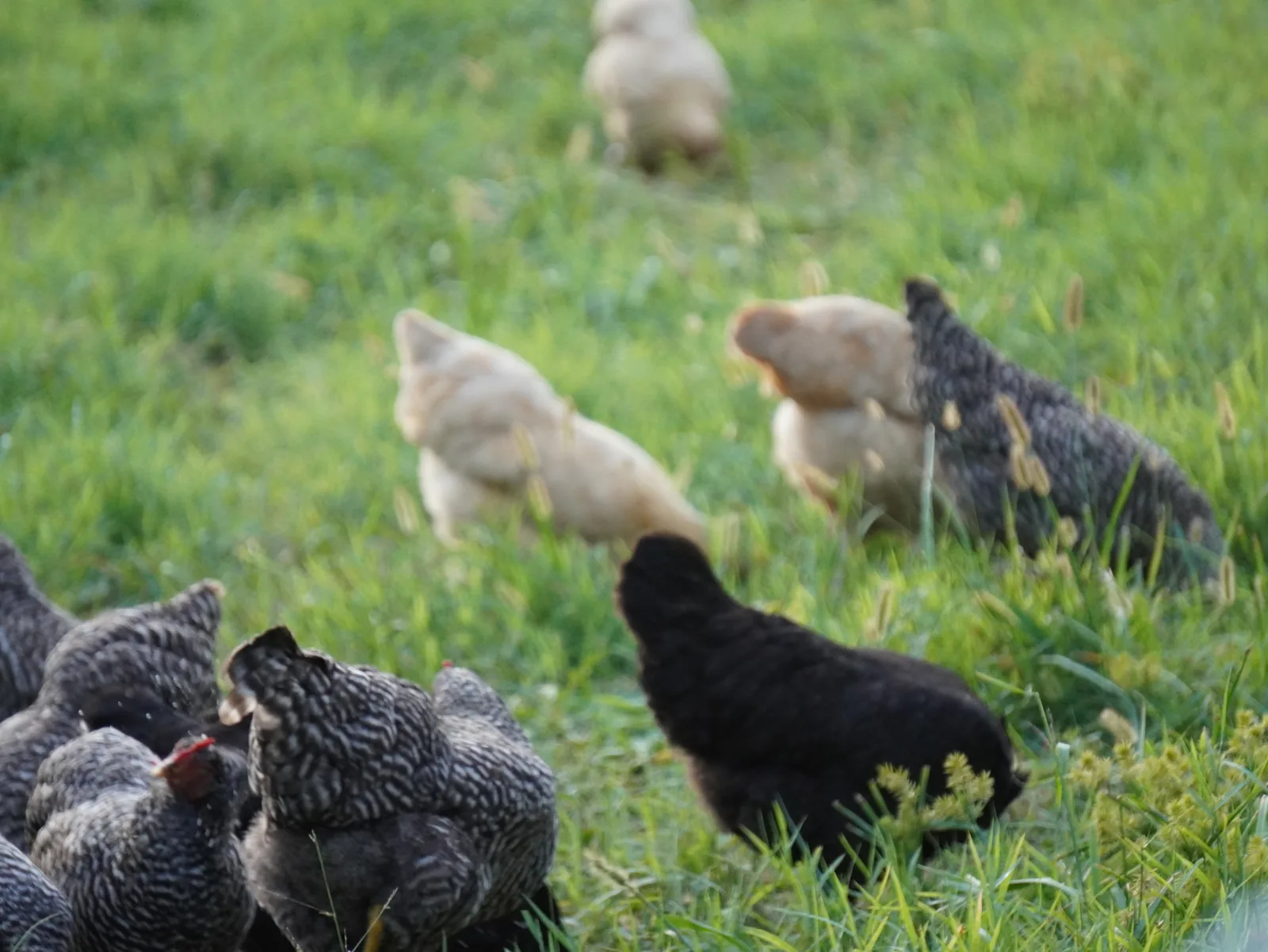
At Smoky Mountain Acres in Cosby, our approach is simple: our chickens are pasture-raised, allowed to forage naturally, and supplemented with organic feed.
For families who care about where their food comes from, buying eggs directly from a local farm offers something a grocery-store carton cannot always provide: the ability to know how the chickens actually live and what they actually eat.
Where Can You Buy Local Eggs Near Gatlinburg?
Gatlinburg itself is primarily a tourism destination, so finding eggs directly from a working farm may mean driving a short distance outside the busiest parts of town.
Fortunately, Gatlinburg is surrounded by rural communities where small farms are still common.
Areas worth looking in include:
- Cosby
- Sevierville
- Pittman Center
- Newport
- other rural communities surrounding Great Smoky Mountains National Park
The Tennessee Department of Agriculture also operates the Pick Tennessee Products program, which helps consumers locate Tennessee farms, farmers markets, and locally produced foods. The state says the program includes thousands of Tennessee farmers and farm-direct businesses.
If you are visiting Gatlinburg but want food that actually came from this part of Tennessee, looking beyond the Parkway is usually the place to start.
Where Can You Buy Farm-Fresh Eggs Near Sevierville?
Sevierville has a larger agricultural community surrounding it, so there are several ways to look for local eggs.
One current example listed by Pick Tennessee Products is Jessie Farms in Sevierville, which lists eggs among its products and offers on-farm sales as well as farmers-market sales and limited local delivery.
Farm availability changes throughout the year, however.
Chickens do not produce eggs like machines.
Daylight, age, weather, molting, nutrition, flock size, and season can all affect production.
For that reason, it is usually best to contact a small farm before making a special trip.
Where Can You Buy Farm-Fresh Eggs Near Cosby, Tennessee?
Cosby is much more rural than Gatlinburg and sits near the northeastern side of Great Smoky Mountains National Park.
That makes it a natural area to look for small farms, homesteads, and family-run agricultural operations.
Smoky Mountain Acres is located in Cosby, Tennessee, where we raise chickens along with other livestock.
Our chickens are raised on pasture where they can:
- scratch through grass and leaves
- hunt insects
- forage for plants and seeds
- dust-bathe
- explore
- interact naturally with the flock
We supplement what they find on pasture with organic poultry feed.
For us, that distinction matters.
We do not want "farm fresh" to simply mean that an egg came from a small farm.
We want people to understand how the chicken behind that egg was raised.
What Does "Farm-Fresh Eggs" Actually Mean?
"Farm fresh" is a common phrase, but it does not automatically tell you anything specific about how a chicken was raised.
A farm-fresh egg could come from:
- a chicken living mainly indoors
- a free-range flock
- a pasture-raised flock
- hens fed conventional feed
- hens fed organic feed
That is why buying directly from a farmer can be useful.
Instead of relying entirely on a label, you can ask questions.
Ask how the chickens are raised
Do they actually live on pasture?
Do they have outdoor access every day?
How much room do they have?
Ask what the chickens eat
Pasture-raised and organic are not the same thing.
A pasture-raised chicken may still receive conventional feed.
At our farm, our chickens forage on pasture and receive organic feed as their supplemental ration.
Ask how fresh the eggs are
Small farms often sell eggs much closer to the time they were laid than eggs moving through a larger commercial distribution system.
The exact timing will vary by farm, so asking is better than assuming.
What Is the Difference Between Local Eggs and Grocery-Store Eggs?
The largest difference may not be visible after you crack the shell.
It is the relationship between the buyer and the farm.
When you buy eggs from a grocery store, you typically know whatever information appears on the carton.
When you buy directly from a small farm, you may be able to find out:
- where the chickens live
- what they eat
- whether they are pasture-raised
- whether their feed is organic
- how the farm manages its pasture
- how large the flock is
- how recently the eggs were collected
That level of transparency is one of the main reasons many families choose local food.
Are Local Eggs Pasture-Raised?
Not necessarily.
"Local" only tells you that the eggs were produced relatively nearby.
It does not tell you how the hens were housed.
A local farm might raise chickens:
- primarily indoors
- in movable chicken tractors
- in permanent outdoor runs
- on rotating pasture
- completely free-range
- through some combination of these systems
If pasture-raised eggs are important to you, ask the farmer directly.
Are Farm-Fresh Eggs Organic?
Again, not necessarily.
"Farm fresh," "local," "pasture-raised," and "organic" all mean different things.
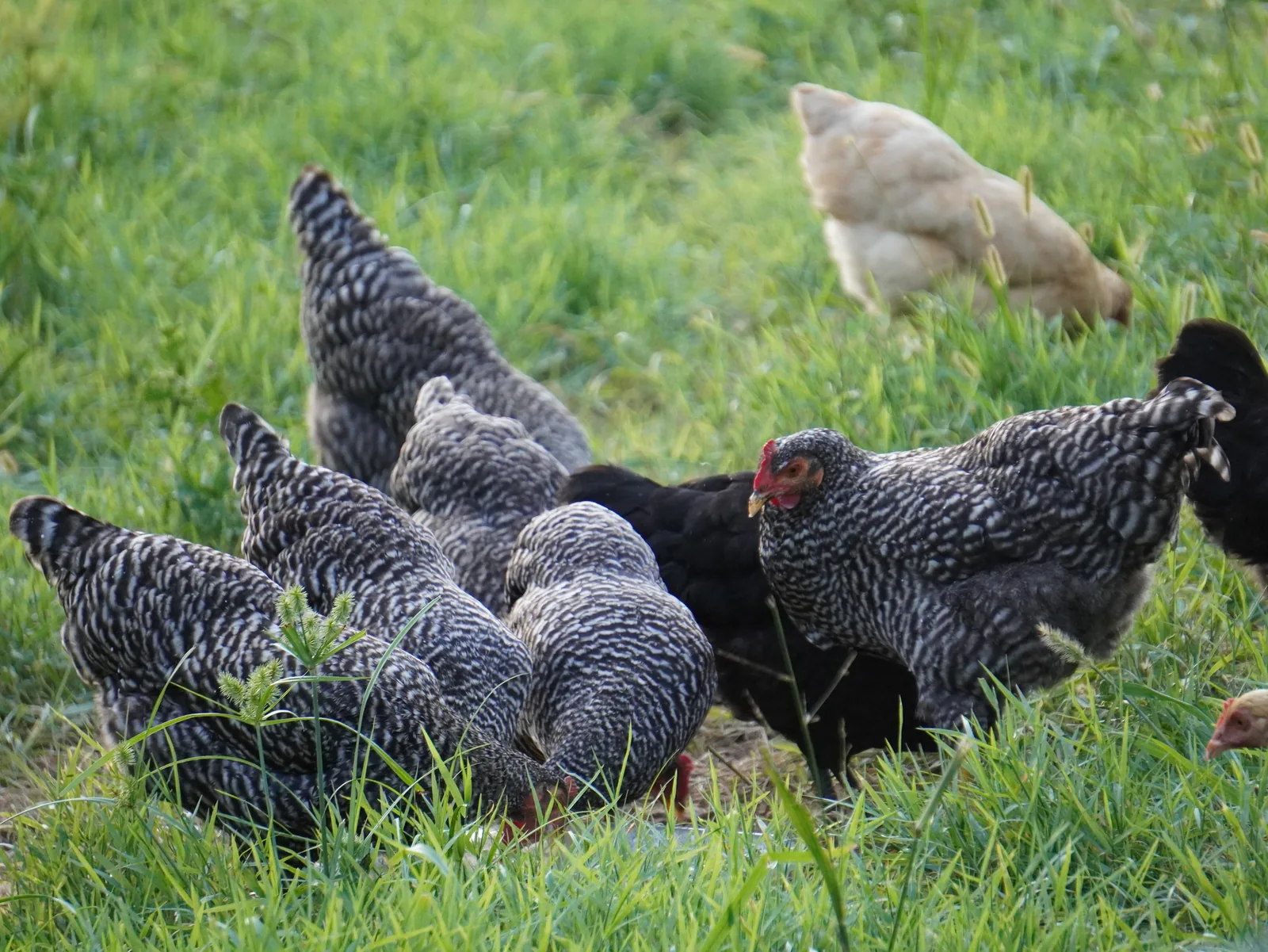
At Smoky Mountain Acres, our chickens are pasture-raised and fed organic feed.
That describes our farming practices.
It should not be confused with a claim that our eggs carry USDA Organic certification unless and until they are actually certified under that program.
We would rather explain exactly what we do than rely on broad marketing language.
What Do Pasture-Raised Chickens Eat?
Pasture-raised chickens are omnivores.
When they are outside, they may eat:
- grass
- tender plants
- seeds
- beetles
- grasshoppers
- worms
- larvae
- spiders
- other insects and small invertebrates
They also generally need balanced poultry feed.
Laying eggs places significant nutritional demands on a hen, particularly for protein, energy, minerals, and calcium.
Our chickens forage naturally while also receiving organic feed formulated for poultry.
We think the two belong together.
Pasture gives chickens the opportunity to behave naturally.
Good feed helps make sure their nutritional needs are met.
Why Do Egg Yolks From Local Farms Sometimes Look Darker?
People often notice that eggs from pasture-based flocks can have darker yellow or orange yolks.
Yolk color is strongly influenced by what chickens eat.
Access to green plants, insects, and various feed ingredients can change yolk pigmentation.
However, yolk color by itself does not prove that an egg is pasture-raised, organic, or nutritionally superior.
Some commercial feed formulations can also produce darker yolks.
If you want to know how a chicken was raised, it is better to ask the farmer than to judge the farming system by yolk color.
Are Brown Eggs Better Than White Eggs?
No.
Shell color mainly comes down to genetics.
Different chicken breeds lay different colored eggs.
Depending on the flock, you may see:
- white
- cream
- light brown
- dark brown
- blue
- green
- olive-colored eggs
Shell color does not tell you whether the bird was pasture-raised or fed organic feed.
A colorful carton can be enjoyable, but the shell is not a nutritional grading system.
Why Buy Eggs From a Small East Tennessee Farm?
There are practical reasons, but there is also something more basic about it.
Buying local keeps food connected to a real place.
You know that the eggs did not simply appear in a refrigerated case.
There was a chicken.
There was a pasture.
There was someone carrying water, moving fencing, checking nesting boxes, watching for predators, hauling feed, and gathering eggs.
On a small farm, food is still visibly connected to the work required to produce it.
That matters to a lot of families.
It matters to us too.
What Should You Ask Before Buying Local Eggs?
If you are looking for eggs near Gatlinburg, Sevierville, Cosby, or elsewhere in East Tennessee, these questions will tell you far more than the phrase "farm fresh."
Are your chickens pasture-raised?
Ask whether the birds genuinely spend their time foraging outdoors.
What do you feed your chickens?
Ask specifically whether the feed is conventional, non-GMO, organic, or certified organic.
Do you use pesticides or herbicides where they forage?
This matters if avoiding those inputs is important to your household.
How often are eggs collected?
Small farms may collect once or several times per day.
When were these eggs laid?
This gives you a much better idea of freshness than simply seeing "farm fresh" written on a sign.
Do you sell directly from the farm?
Some farms use self-service stands, scheduled pickup, farmers markets, or appointment-based sales.
Always check before arriving.
Finding Local Food in East Tennessee
The Tennessee Department of Agriculture's Pick Tennessee Products program is another useful resource for locating farms and farm-direct products throughout the state.
The department describes the program as a way to connect customers with Tennessee farmers, farmers markets, food producers, and agricultural experiences.
The directory can be particularly useful if you are searching outside our immediate area or looking for products we do not currently have available.
Local farm products are seasonal by nature.
That is part of buying directly from agriculture rather than from an industrial supply chain.
Farm-Fresh Eggs at Smoky Mountain Acres
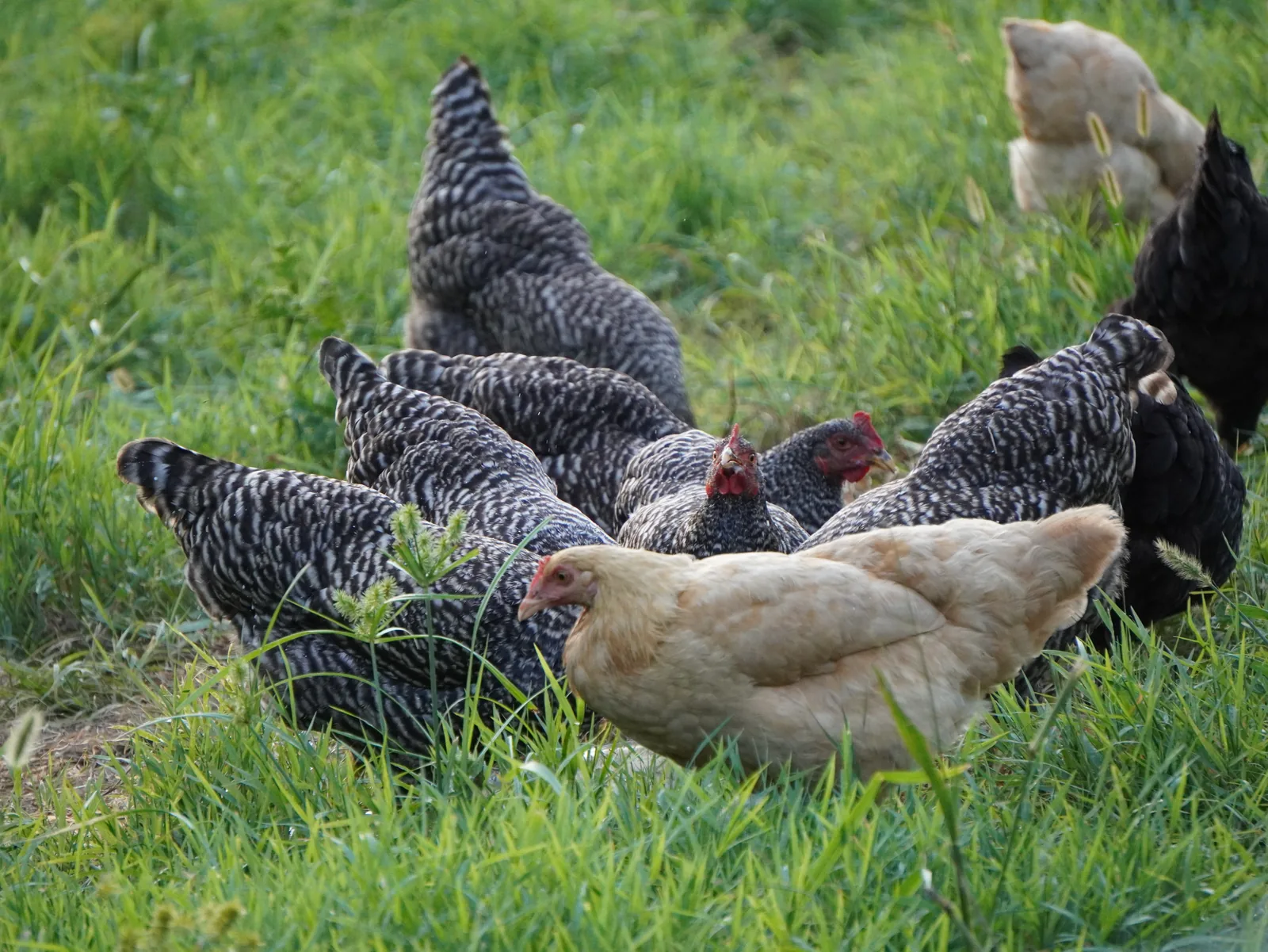
At Smoky Mountain Acres, our chickens are part of a mixed-species farmstead in Cosby, Tennessee, near Gatlinburg, Sevierville, and Great Smoky Mountains National Park.
Our approach is centered around three things:
Pasture. Organic feed. Transparency.
Our chickens are allowed to forage naturally outdoors.
They scratch.
They chase bugs.
They eat plants.
They dust-bathe.
They occasionally decide that wherever we are currently trying to work is also exactly where the flock needs to be.
And alongside what they find naturally, we provide organic poultry feed to meet their nutritional needs.
That is what we mean when we talk about farm-fresh eggs.
Not simply an egg produced somewhere with a barn nearby.
An egg from a chicken whose daily life we actually know.
Are Eggs Available Year-Round?
Egg availability can change throughout the year.
Spring and summer typically bring longer daylight hours and stronger production, while hens often slow down as daylight decreases.
Molting can also temporarily reduce laying.
Because we are a small farm rather than a commercial egg facility, availability depends on what our flock is actually producing.
That is one of the realities of seasonal agriculture.
Sometimes there are plenty of eggs.
Sometimes the chickens apparently hold a meeting and collectively decide otherwise.
Visiting the Smoky Mountains? Look Beyond the Tourist Strip
Millions of visitors come to the Smoky Mountains each year for the scenery, trails, wildlife, and mountain culture.
But East Tennessee's agricultural communities are also part of this region.
A short drive away from the attractions of Gatlinburg and Sevierville are places where people are still raising chickens, tending gardens, keeping livestock, cutting hay, and producing food.
For families visiting the Smokies, buying something directly from a local farm can be a small way to experience another side of East Tennessee.
And if you live here, supporting local farms helps keep that side of the region alive.
Frequently Asked Questions About Local Eggs Near Gatlinburg and Sevierville
Where can I buy farm-fresh eggs near Gatlinburg, Tennessee?
Small farms in the rural communities surrounding Gatlinburg often sell eggs directly. Cosby, Sevierville, Pittman Center, and nearby East Tennessee communities are good places to search. The Tennessee Department of Agriculture's Pick Tennessee Products directory can also help locate participating farms.
Where can I buy farm-fresh eggs near Sevierville?
Several small farms operate around Sevierville. For example, Jessie Farms currently lists eggs and on-farm sales through the state's Pick Tennessee Products directory. Availability should always be confirmed before visiting.
Where can I buy local eggs in Cosby, Tennessee?
Smoky Mountain Acres is located in Cosby, Tennessee, where we raise pasture-based chickens and supplement them with organic poultry feed. Egg availability depends on current flock production.
Are local eggs automatically organic?
No. Local simply refers to where the eggs were produced. A local farm may use conventional or organic feed. Ask the farmer directly.
Are farm-fresh eggs pasture-raised?
Not necessarily. "Farm fresh" does not specify a housing system. Ask whether the hens actually have access to pasture.
Do pasture-raised chickens still eat chicken feed?
Yes. Chickens can obtain plants, insects, seeds, and other food from pasture, but laying hens generally still need balanced poultry feed.
Are your chickens fed organic feed?
Yes. At Smoky Mountain Acres, our chickens forage on pasture and are supplemented with organic poultry feed.
How far is Cosby from Gatlinburg and Sevierville?
Cosby is on the northeastern side of the Smoky Mountains region and is within driving distance of both Gatlinburg and Sevierville. It is a rural community close to the Cosby area of Great Smoky Mountains National Park.
Know the Farm Behind Your Food
There are plenty of labels that can be printed on an egg carton.
Local.
Farm fresh.
Free-range.
Pasture-raised.
Organic.
Those words can be useful, but none are as informative as knowing how a particular farmer actually raises their chickens.
That is the advantage of local agriculture.
You can ask.
You can see.
You can know.
And when breakfast comes from a flock scratching through an East Tennessee pasture a short distance from home, "farm fresh" stops being a marketing phrase.
It becomes a description.