Why We Make All of Our Bread With Sourdough
- Smoky Mountain Acres
 Smoky Mountain Acres

Bread is one of the simplest foods on our table.
Flour. Water. Salt. Time.
At Smoky Mountain Acres, all of the bread we eat at home is sourdough, and we do not buy ordinary store-bought bread. We also make our sourdough without added sugar.
That decision is partly about ingredients, partly about tradition, and partly about the kind of food culture we are trying to build around our farmstead.
Sourdough takes longer than opening a bag from the grocery store.
It requires keeping a starter alive, mixing dough ahead of time, waiting through fermentation, shaping, proofing, and baking.
But that slower process is exactly part of the appeal.
What Is Sourdough Bread?
Sourdough bread is bread leavened through fermentation using a living starter containing naturally occurring yeasts and lactic acid bacteria.
Instead of relying only on commercial baker's yeast to make the dough rise quickly, sourdough uses a culture of flour and water that is maintained over time.
When flour and water are combined and allowed to ferment, microorganisms begin feeding on carbohydrates in the flour.
Over time, a healthy starter develops a stable community of yeast and bacteria.
When that starter is mixed into bread dough, fermentation begins.
The yeast produces gases that help the bread rise.
The bacteria produce organic acids that contribute to sourdough's characteristic flavor and affect the dough in several other ways.
Sourdough is not a new health trend.
It is one of the oldest ways humans have made leavened bread.
What Is a Sourdough Starter?
A sourdough starter is essentially a maintained culture of:
- flour
- water
- wild yeast
- lactic acid bacteria
It is sometimes called a "mother," "levain," or simply "starter."
A baker keeps the culture alive by periodically feeding it fresh flour and water.
Once active, part of the starter can be mixed into bread dough while the remainder is maintained for future baking.
That means one starter can theoretically continue for years.
There is something we appreciate about that.
Instead of buying a new packet every time bread is made, you maintain a living culture and keep using it.
Why Do We Make All of Our Bread With Sourdough?
For us, there is not one single reason.
It is the combination of several things.
We like the simplicity of the ingredients.
We like traditional fermentation.
We like knowing exactly what went into our bread.
We prefer not to add sugar unnecessarily.
And we like producing something at home that many families have become accustomed to purchasing already made.
On a farmstead, making bread also fits naturally with everything else.
We already spend time caring for animals, growing food, preserving things, repairing things, and learning skills that make us less dependent on buying every finished product.
Bread belongs in that same category.
Why Don't We Add Sugar to Our Sourdough Bread?
Many homemade and commercial bread recipes include added sugar, honey, corn syrup, or other sweeteners.
Bread does not necessarily require them.
Our basic sourdough bread is made without added sugar.
The flour itself still contains carbohydrates and naturally occurring sugars can be present or develop during fermentation, so "no added sugar" is the accurate way to describe it.
For us, the principle is simple:
If the bread does not need added sugar, we would rather leave it out.
A basic sourdough loaf can be made with just flour, water, starter, and salt.
That is difficult to simplify much further.
Does Sourdough Fermentation Change the Bread?
Yes.
Fermentation is not simply a different way to make dough rise.
During sourdough fermentation, yeast and bacteria alter components of the flour.
Research has found that sourdough fermentation can affect things such as:
- organic acid content
- protein structure
- starch characteristics
- phytate levels
- mineral accessibility
- flavor
- texture
- shelf life
A systematic review of decades of sourdough research found evidence that fermentation can improve mineral bioavailability, modify proteins and carbohydrates, and reduce some antinutritional compounds such as phytate.
That does not mean sourdough is a miracle food.
It means fermentation actually changes the food.
Is Sourdough Bread Healthier Than Regular Bread?
The most accurate answer is:
It can have nutritional advantages, but sourdough fermentation alone does not automatically make every loaf healthier than every other type of bread.
The type of flour matters.
Fermentation time matters.
The starter matters.
The recipe matters.
The rest of a person's diet matters.
Research has shown promising effects from sourdough fermentation, including changes in mineral availability, digestibility, and post-meal blood glucose in some studies. However, clinical research is mixed, and researchers have not established that sourdough universally produces major health benefits compared with other breads.
That distinction is important.
We make sourdough because we value traditional fermentation, simple ingredients, flavor, and control over what goes into our food.
We do not need to turn it into a cure-all to appreciate it.
Does Sourdough Have a Lower Glycemic Impact?
Possibly, depending on the bread.
Some studies have found that sourdough bread produces a lower rise in blood glucose after eating compared with certain conventionally fermented breads.
A 2024 systematic review and meta-analysis found lower post-meal blood glucose responses in some sourdough comparisons, particularly with whole-wheat sourdough, although the certainty of the evidence was rated low to very low.
Other reviews have found the evidence inconsistent and concluded that sourdough fermentation by itself has not been conclusively shown to lower glycemic response in healthy people.
So we would not tell someone:
"Sourdough doesn't raise your blood sugar."
It absolutely contains carbohydrates.
A better statement is:
Fermentation may change how some sourdough breads affect blood glucose, but the effect varies considerably according to the flour, recipe, fermentation, and individual.
Is Sourdough Easier to Digest?
Some people report that they tolerate traditionally fermented sourdough better than quickly fermented bread.
There are plausible reasons for that.
During fermentation, microorganisms modify proteins and carbohydrates in the dough. Sourdough fermentation may also reduce certain fermentable compounds depending on the recipe and fermentation process.
But tolerance varies by person and loaf.
Sourdough is also not automatically gluten-free.
Ordinary wheat sourdough still contains gluten and should not be treated as safe for someone with celiac disease unless it has specifically been produced and verified to meet gluten-free requirements.
That is another area where simple food gets buried beneath exaggerated claims.
Fermentation does a lot.
It does not perform magic.
What Is Phytic Acid, and Why Does Sourdough Fermentation Matter?
Grains naturally contain phytic acid, or phytate.
Phytate can bind minerals such as iron, zinc, magnesium, and calcium, which can reduce how accessible some of those minerals are during digestion.
The acidic environment created during sourdough fermentation helps activate enzymes that break down phytate.
Research reviews have consistently identified reduced phytate and improved mineral accessibility as one of the better-supported nutritional effects of sourdough fermentation.
This is one example of why traditional food preparation methods can matter beyond flavor.
The flour going into the bowl and the finished bread coming out of the oven are chemically different foods.
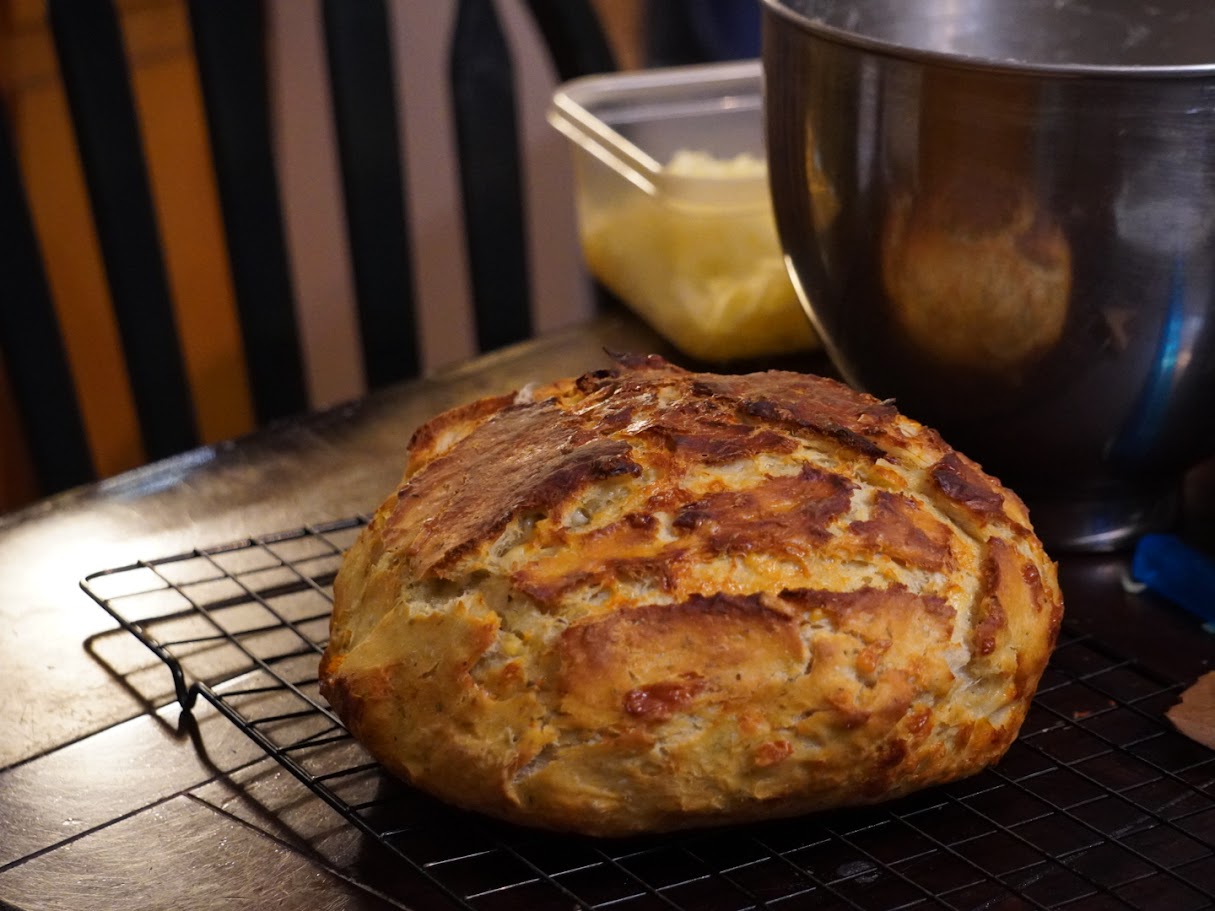
Why Does Sourdough Taste Different?
Fermentation produces acids and many aromatic compounds.
These contribute to the depth of flavor associated with sourdough.
Depending on the starter and fermentation process, a loaf can range from very mild to noticeably tangy.
Longer fermentation does not simply make bread "more sour."
Temperature, hydration, flour type, starter activity, and fermentation schedule all influence the finished loaf.
This is one of the things that makes sourdough interesting.
Two loaves made from essentially the same four ingredients can taste remarkably different.
Why Does Homemade Sourdough Go Stale Differently?
One reason sourdough became such an important traditional bread-making method is that fermentation affects shelf life.
Organic acids produced during fermentation can slow certain types of spoilage and affect how the bread ages. Reviews of sourdough research consistently identify improved shelf life and bread quality among its technological advantages.
That does not mean homemade sourdough lasts forever.
It means fermentation helps produce bread with characteristics that are naturally useful for keeping food.
People figured this out long before anyone understood the microbiology involved.
Is Homemade Sourdough Cheaper Than Store-Bought Bread?
It can be.
At its most basic, sourdough requires inexpensive ingredients:
- flour
- water
- salt
A starter can be maintained indefinitely using flour and water.
The larger costs are time, electricity or fuel for baking, and the quality of flour you choose to use.
Whether homemade bread is financially cheaper therefore depends on what kind of store-bought bread you are comparing it with.
Compared with artisan sourdough from a bakery, homemade sourdough can be considerably less expensive.
Compared with the cheapest mass-produced sandwich bread, the difference may be much smaller.
But cost is not our only reason for making it.
The more important advantage is knowing exactly what is in the loaf.
Why Not Just Buy Sourdough at the Grocery Store?
You can.
There are good commercial sourdough breads.
But the word "sourdough" on the front of a package does not necessarily tell you everything about how that bread was produced.
Recipes and production methods vary widely.
Some commercial products use genuine sourdough fermentation.
Others combine sourdough cultures with commercial yeast.
Some contain additional sweeteners, oils, preservatives, dough conditioners, or other ingredients.
That does not automatically make them bad foods.
It simply means "sourdough" covers a wide range of products.
When we make ours at home, we do not have to wonder.
We know what went into it because we put it there.
What Is in Our Basic Sourdough Bread?
Our philosophy is to keep bread simple.
A traditional basic sourdough loaf needs very little:
Flour.
Water.
Sourdough starter.
Salt.
No added sugar.
No requirement for a long ingredient list.
No need to turn bread into dessert.
Different recipes may include additional ingredients, but the foundation remains extremely simple.
Does Making Sourdough Take All Day?
Yes and no.
The entire process can stretch across much of a day or even overnight, but most of that time is fermentation.
The dough is doing more work than the baker.
A typical process includes:
- Feed the starter.
- Mix the dough.
- Allow the dough to ferment.
- Stretch or fold it periodically.
- Shape the loaf.
- Allow it to proof.
- Bake it.
Once you understand the rhythm, sourdough becomes less about standing in the kitchen all day and more about remembering what stage the dough is in.
Farm life actually works fairly well with that schedule.
Mix dough.
Go do chores.
Come back.
Fold it.
Go feed animals.
Come back.
Shape it.
Eventually, bread appears.
Why Sourdough Fits Our Farmstead
A lot of what we are doing at Smoky Mountain Acres comes back to the same idea:
We want to understand the systems that produce the things we depend on.
We want to know what our animals eat.
We want to understand the land they graze.
We want to know where our eggs come from.
And we want to know what is in our bread.
Making sourdough is a small piece of that.
It is not about pretending everyone needs to live exactly the way people lived two hundred years ago.
We use modern tools.
We use electricity.
We use the internet.
We also think some old processes survived for a reason.
Fermenting flour and water until it becomes bread is one of them.
Frequently Asked Questions About Sourdough Bread
What is sourdough bread?
Sourdough bread is bread fermented with a starter containing naturally occurring yeast and lactic acid bacteria rather than relying solely on commercial baker's yeast.
Does sourdough bread contain sugar?
Sourdough bread contains carbohydrates and may contain naturally occurring sugars. However, sourdough bread can be made without adding table sugar, honey, syrup, or other sweeteners.
Does sourdough bread need added sugar?
No. Traditional sourdough bread can be made with flour, water, starter, and salt without any added sugar.
Is sourdough healthier than white bread?
Sourdough fermentation can change mineral availability, digestibility, and other properties of bread, but health effects also depend heavily on the flour, recipe, fermentation, and overall diet. Research does not support treating all sourdough bread as automatically healthier than all other bread.
Is sourdough bread gluten-free?
Ordinary wheat sourdough is not gluten-free. People with celiac disease should not assume conventional sourdough is safe to eat.
What is a sourdough starter?
A sourdough starter is a culture made from flour and water containing yeasts and lactic acid bacteria. Part of the starter is used to ferment bread dough while the remaining culture is maintained for future baking.
Why does sourdough take so long to make?
Sourdough relies on fermentation rather than rapid leavening alone. The microorganisms need time to ferment the dough, produce gas, develop flavor, and alter components of the flour.
Do you buy bread at Smoky Mountain Acres?
For our household, we make our bread with sourdough rather than relying on ordinary store-bought bread. Our basic sourdough is made without added sugar.
Sometimes Slower Is Simpler
Modern food gives us an extraordinary amount of convenience.
That is not automatically a bad thing.
But convenience can also separate us from understanding how basic foods are made.
Bread does not have to be mysterious.
You can mix flour and water.
You can maintain a starter.
You can give microorganisms enough time to do what they have done for generations.
And you can pull a loaf out of the oven made from a handful of ingredients you actually recognize.
Around our farm, that is enough reason to keep making it.
- Farmstead